
New roofs and re-roofing
Full strip and re-cover on tiled and slate roofs across Flintshire, Deeside, Chester and Wrexham — new membrane, new battens, and the ventilation and detailing done properly underneath.
When a roof has run out of repairs
Roofs rarely fail all at once. What normally happens is that repairs get more frequent, then start overlapping, and at some point you're spending real money every year to keep an old covering going.
The signs that a roof is approaching replacement rather than repair:
- Tiles or slates delaminating, crumbling or losing their surface across the whole roof rather than in patches.
- Underlay that has perished — visible as tears and sagging when you look up in the loft.
- Nail sickness on older slate roofs, where the fixings have corroded and slates slip for no obvious reason.
- Repeated repairs in different places over a short period.
- Sagging in the roof line, which needs looking at properly before anything else is decided.
None of these on its own means you need a new roof tomorrow. Together, they usually mean you should be planning for one.
What a re-roof actually involves
- Scaffold up. A full strip is not ladder work.
- Strip the existing covering. Tiles or slates off, old underlay and battens removed, everything into a skip.
- Check the structure. This is the point where anything hidden shows up — rotten batten ends, split rafters, failed timber at the eaves. We'll show you and price any additional work before carrying on.
- New breathable membrane laid and lapped correctly, with support trays at the eaves so water discharges into the gutter rather than behind it.
- New treated battens set out to the correct gauge for the covering.
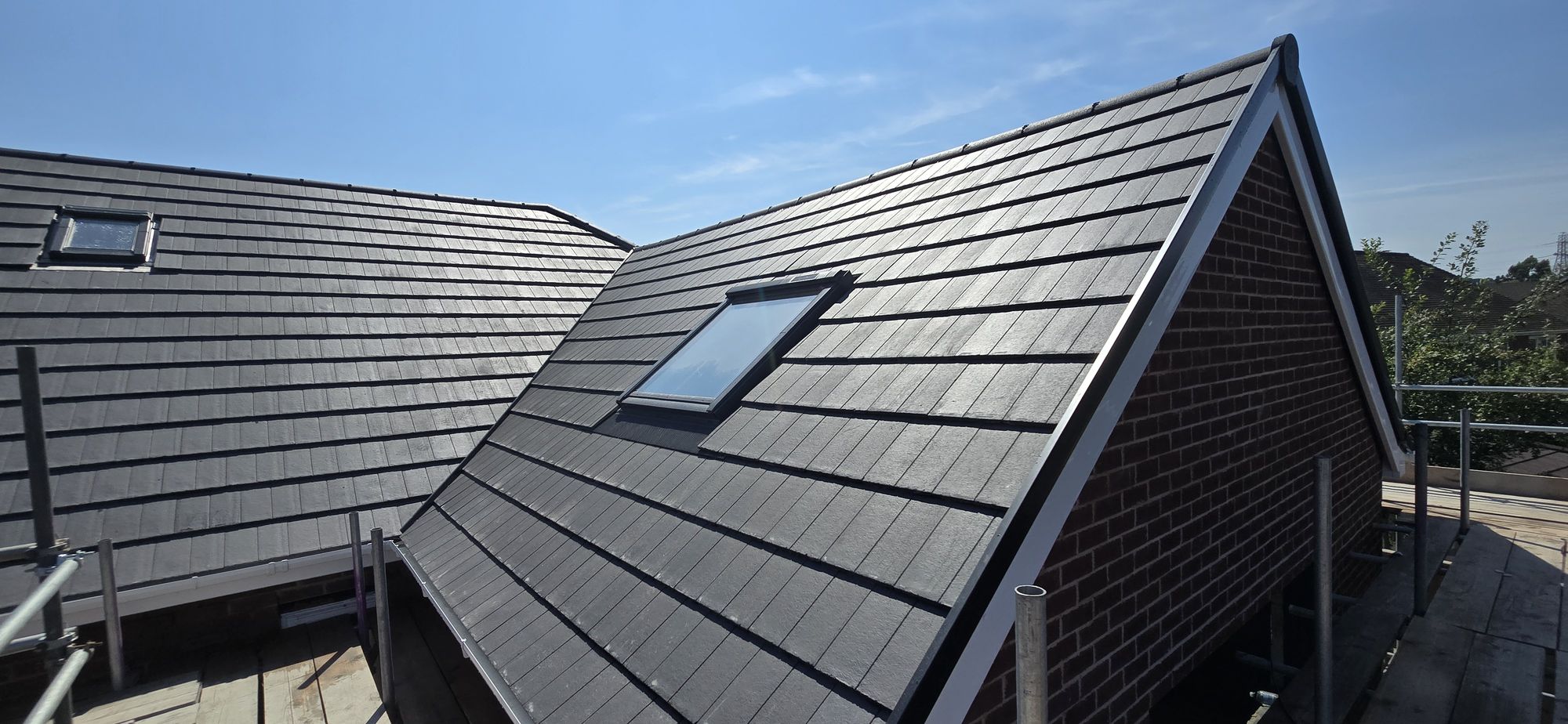
- New covering laid and fixed, with ventilation and any required fixing pattern in place.
- Details. Ridge, verge, valleys, lead flashings, abutments and any roof windows.
- Roofline where included — often the sensible moment to deal with fascias, soffits and guttering while the scaffold is up.
- Clear the site. Waste away, ground checked over, scaffold struck.
A full re-roof can bring building control requirements into play, and the rules differ between Wales and England. Which applies depends on the property, the extent of the work and where it is. We'll tell you if we think it applies to your job so it can be dealt with properly rather than discovered later.
Coverings we work with
| Concrete tiles | Interlocking and plain concrete tiles — the most common covering on properties around Deeside and Flintshire. |
|---|---|
| Clay tiles | Plain and interlocking clay, including matching in with existing on older properties. |
| Natural slate | Traditional slate roofing, laid and fixed to suit the pitch and exposure. |
| Fibre cement slate | A lighter and lower-cost alternative to natural slate where appropriate. |
| New build & extensions | Roofs on new extensions, garages and outbuildings, tied into the existing roof properly. |
What affects the price
- Roof area and pitch.
- The covering you choose — concrete, clay and natural slate sit at very different price points.
- Complexity: hips, valleys, dormers and chimneys all add labour.
- Scaffolding requirements and access to the property.
- Waste volume — a full strip generates a lot.
- Whether roofline, ridge, verge or chimney work is included at the same time.
- What's found once the covering is off.
We don't quote re-roofs without seeing the property. Anyone who does is guessing, and the number will change.
How we handle the unknown
You can't see under a roof covering until it's off. Any honest roofer will tell you the same.
What we do about that is set it out in the quotation before you commit: what we've assumed, what's included, and what would be treated as additional work if we find it. If something does turn up, we stop, show you, and agree a price before carrying on. No work gets added to your bill that you haven't seen and agreed.
What people ask about re-roofing.
How long does a re-roof take?+
For a typical house, usually somewhere between a few days and a couple of weeks on site, depending on size, complexity and weather. We'll give you a realistic window with the quotation rather than an optimistic one.
Will my house be exposed if it rains?+
We strip and re-cover in sections rather than opening the whole roof at once, and everything is sheeted at the end of each day. A roof under replacement is never left open overnight.
Do I need to move out?+
No. It's noisy, and there will be a scaffold up, but you can live in the house normally throughout.
Can I have a different tile from what's on there now?+
Usually yes, though weight matters — going from slate to concrete tile, for example, adds significant load and needs thinking about. We'll tell you if what you want has structural implications.
Should I do the fascias and guttering at the same time?+
If they're anywhere near the end of their life, yes. The scaffold is already up and the roofline is easiest to get at with the covering off. Doing it separately later means paying for access twice.
What guarantee do I get?+
A written workmanship guarantee from us on the installation, and any manufacturer warranty on the materials is passed through to you separately. We'll explain what each one covers before you commit.
Thinking about a new roof?
It's a big decision and a big spend. Have us come and look properly, and you'll get a straight answer on whether you need one yet.