
Full re-roof on a bungalow in Hawarden
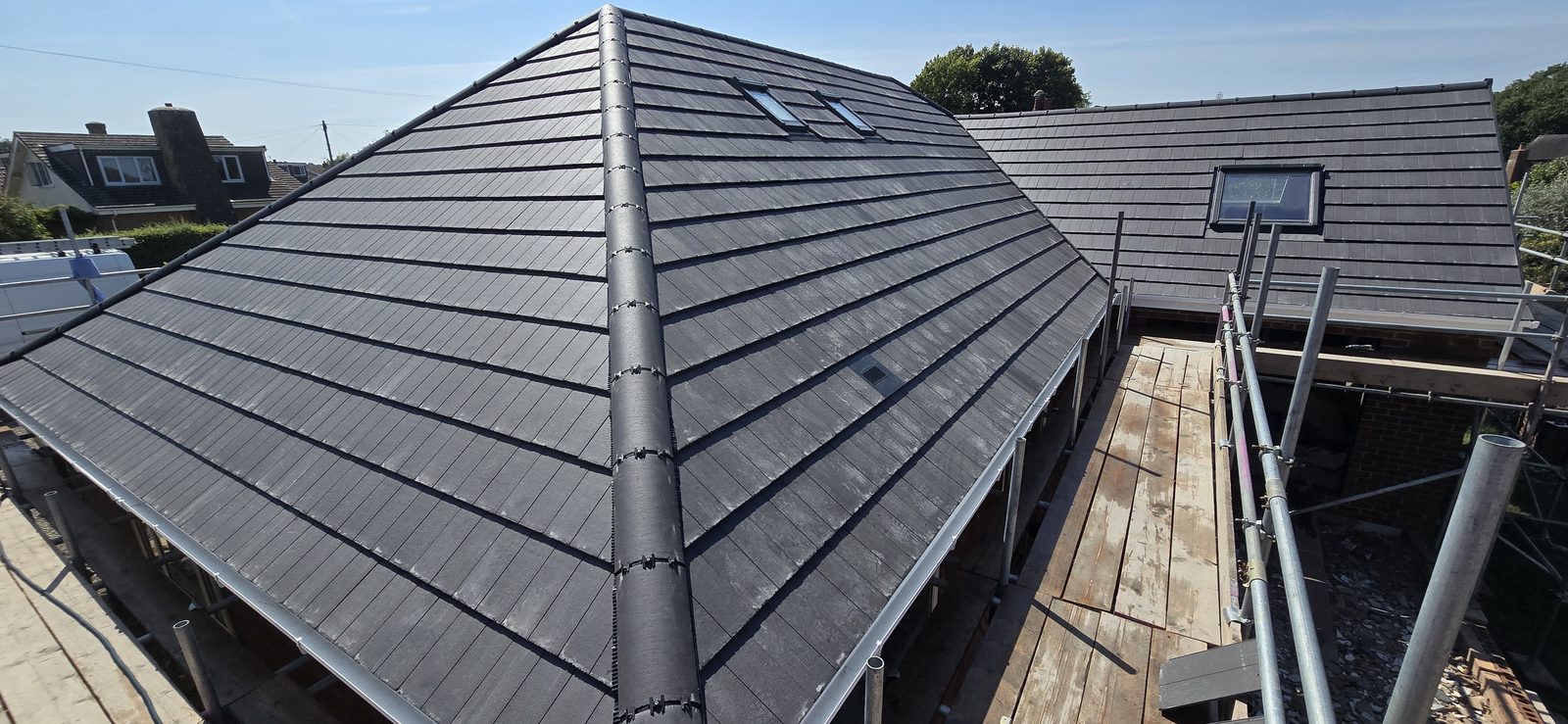
An original roof with perished felt underneath, stripped back to the rafters and replaced with a breathable membrane, Marley Duo Edgemere tiles, dry ridge and dry verge. The new rear extension was tied in as one roof. Ten days, start to finish.
| Location | Hawarden, Flintshire |
|---|---|
| Property | Detached bungalow with new rear extension |
| Work carried out | Full strip and re-roof; new fascias, soffits and guttering; three roof windows; dry ridge and dry verge |
| Roof covering | Marley Duo Edgemere interlocking tiles, grey |
| Underlay | Cromar Vent3 Pro breathable membrane |
| Duration | 10 days |
| Completed | August 2025 |
What the customer had
The roof was original to the property and had reached the end of its working life. The concrete tiles were heavily weathered and covered in lichen — but the real problem was underneath them.
When we stripped the first section back, the original bitumen felt had gone brittle and torn away between the rafters. In places it had gone altogether, leaving the loft insulation open to daylight.
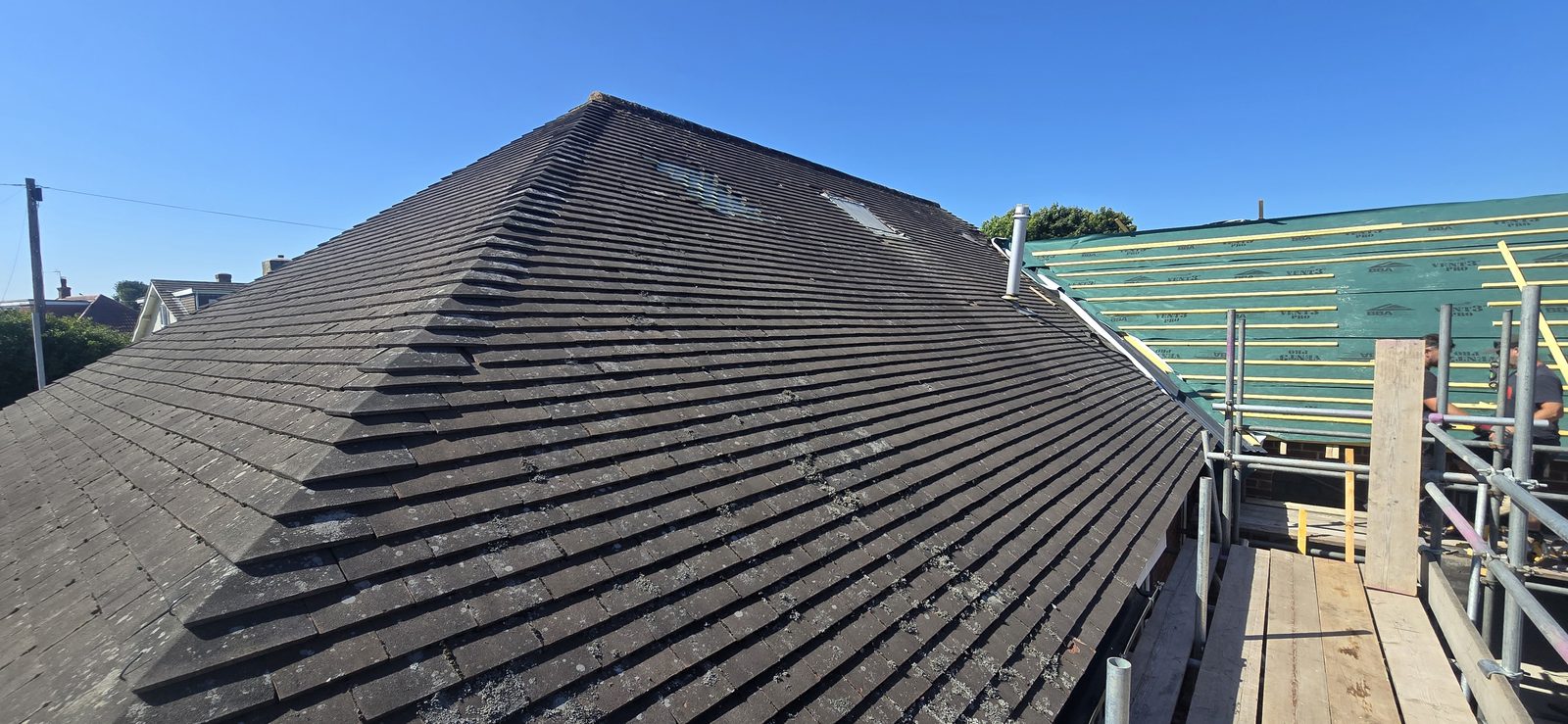 Before
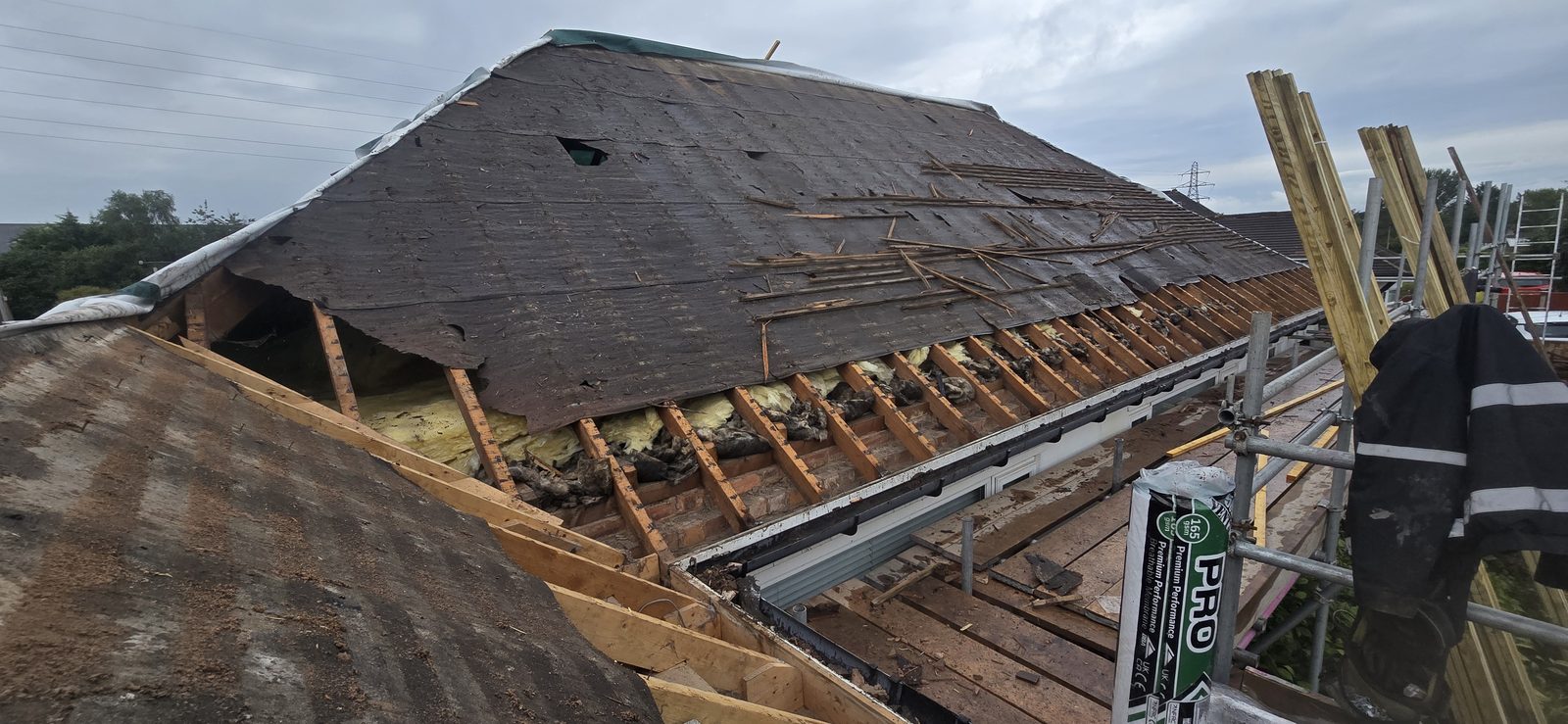 Under the tiles
Why the felt matters
Most homeowners never see their felt, so it's easy to underestimate. The tiles shed the bulk of the rain, but wind-driven rain gets past them on any exposed roof, and it's the layer underneath that carries that water safely down to the gutter.
Once the felt has perished, anything that gets past the tiles goes straight into the loft — onto the insulation, the timbers and eventually the ceilings. At that point, replacing a few slipped tiles is money spent on a roof that's already failing.
What we recommended
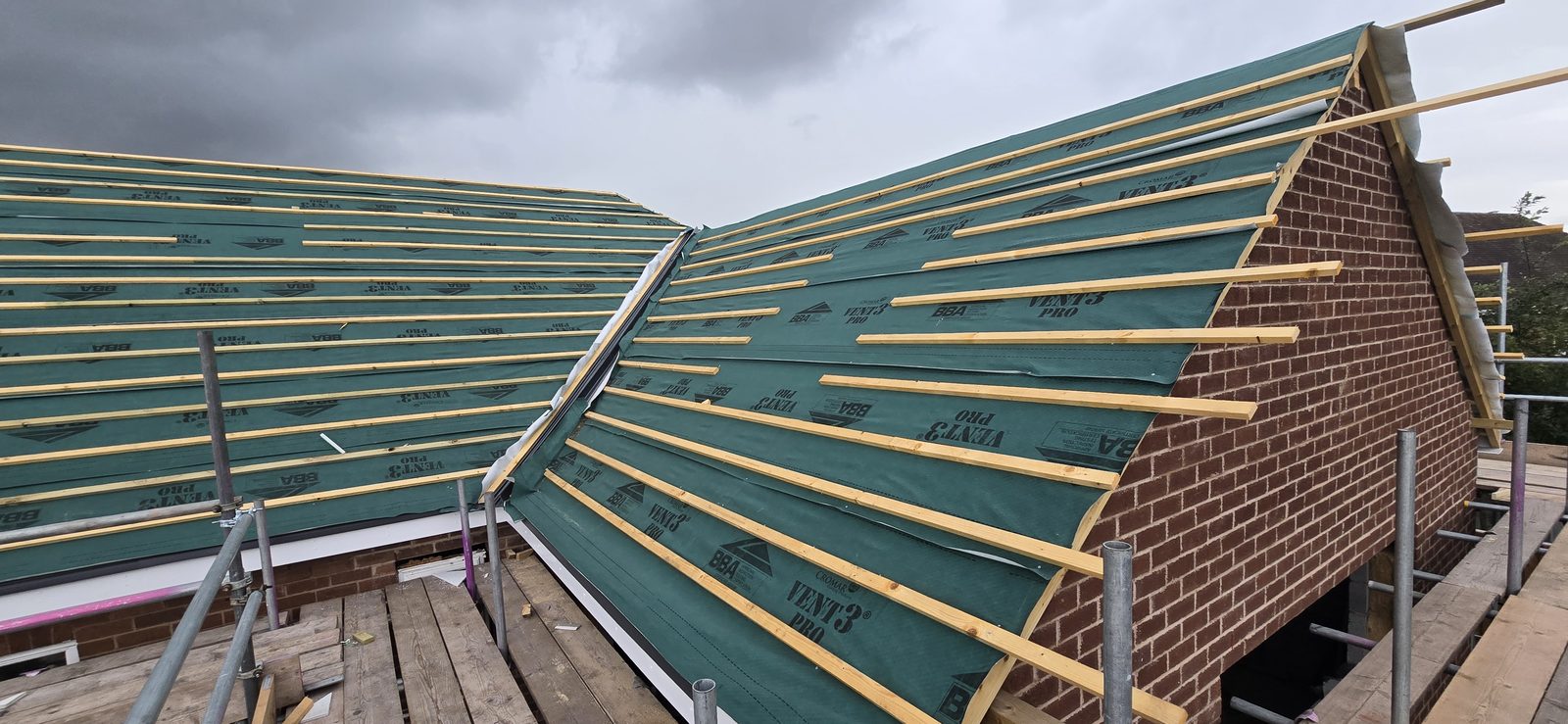
A full strip and re-roof rather than patching. The customer was also having a rear extension built, so the timing worked in their favour: once the builder had formed the new roof structure over the extension, we could tie it into the main roof as one continuous covering instead of leaving a visible join.
The fascias, soffits and guttering were included in the same job. Doing the roofline while the scaffold is already up costs far less than bringing the scaffold back for it later.
Strip, membrane and battens
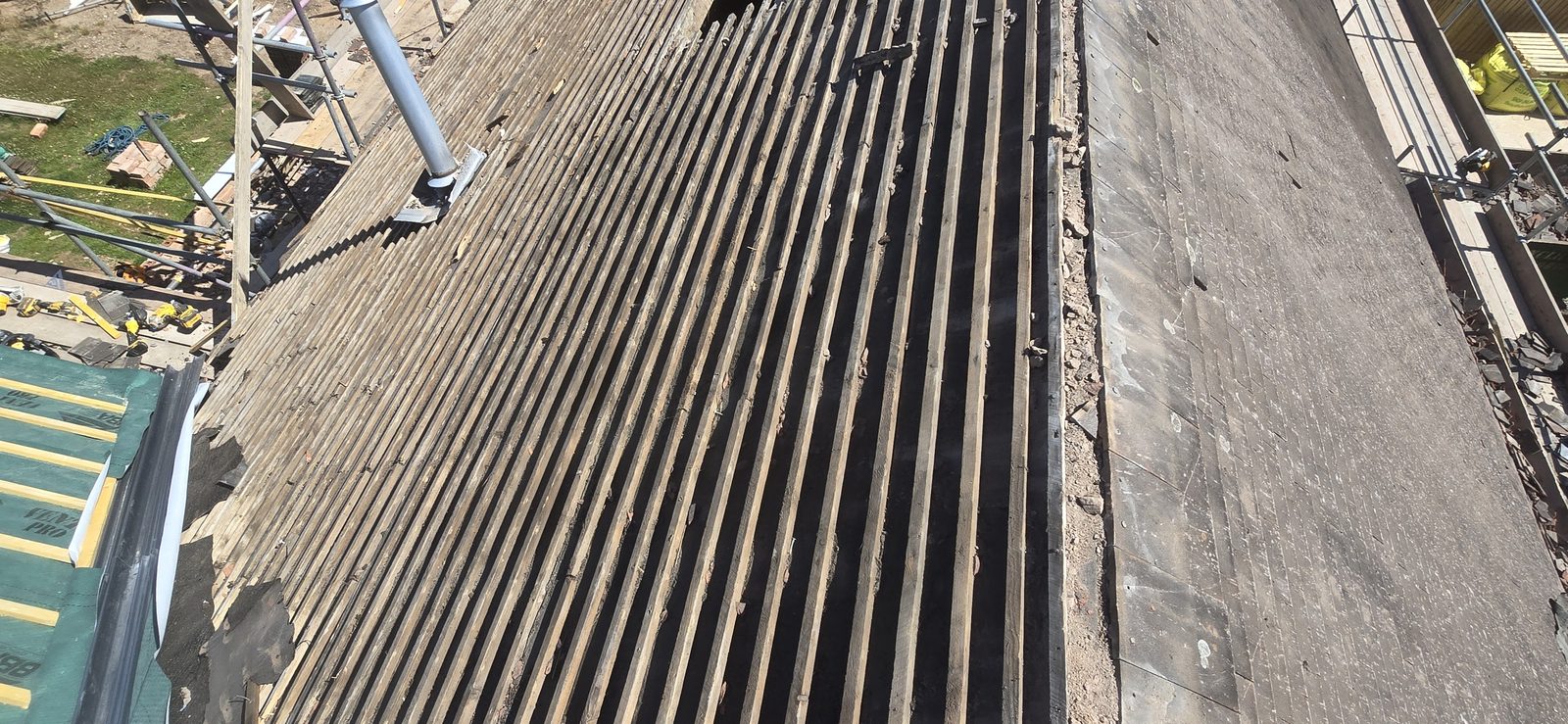
The whole roof was stripped back to the rafters — tiles, old battens and felt — with the waste going straight into a skip on site.
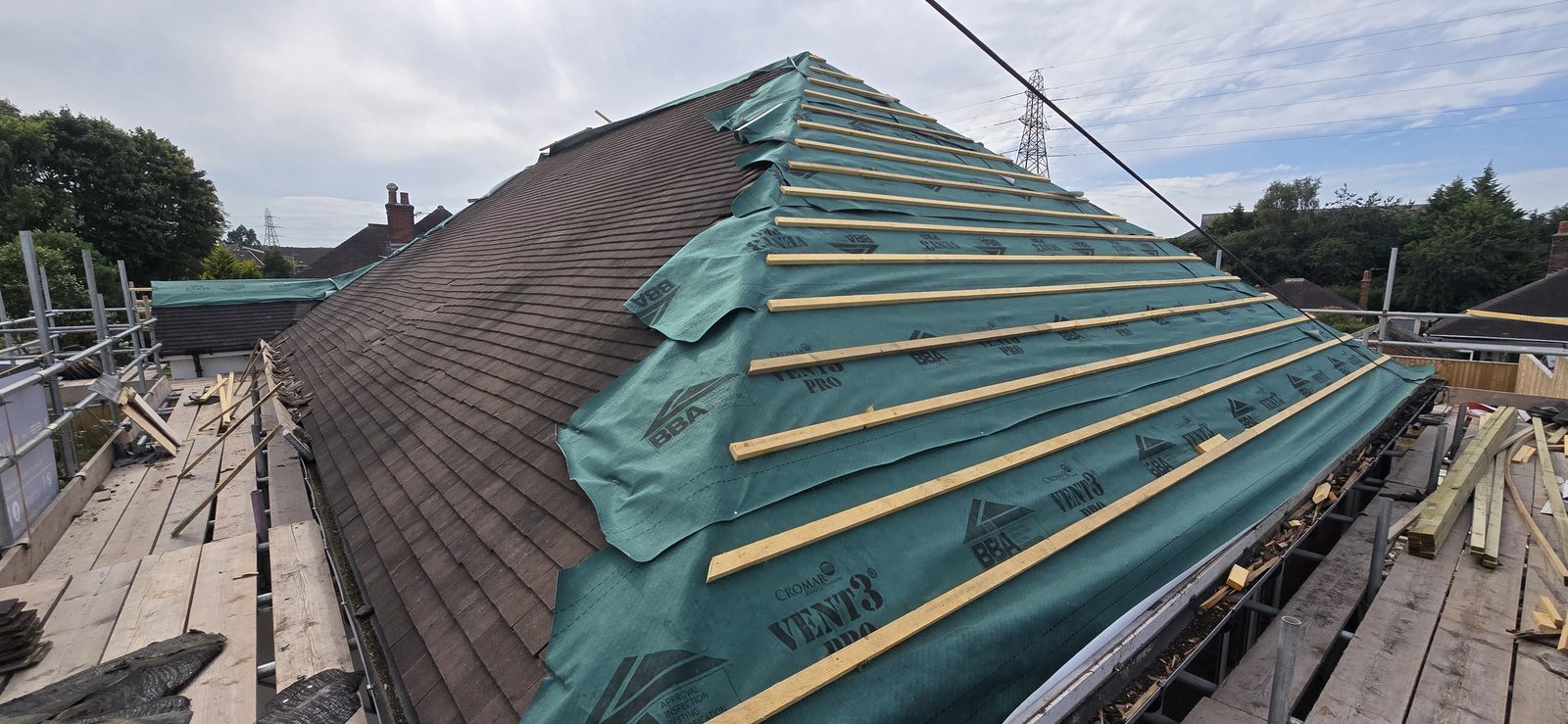
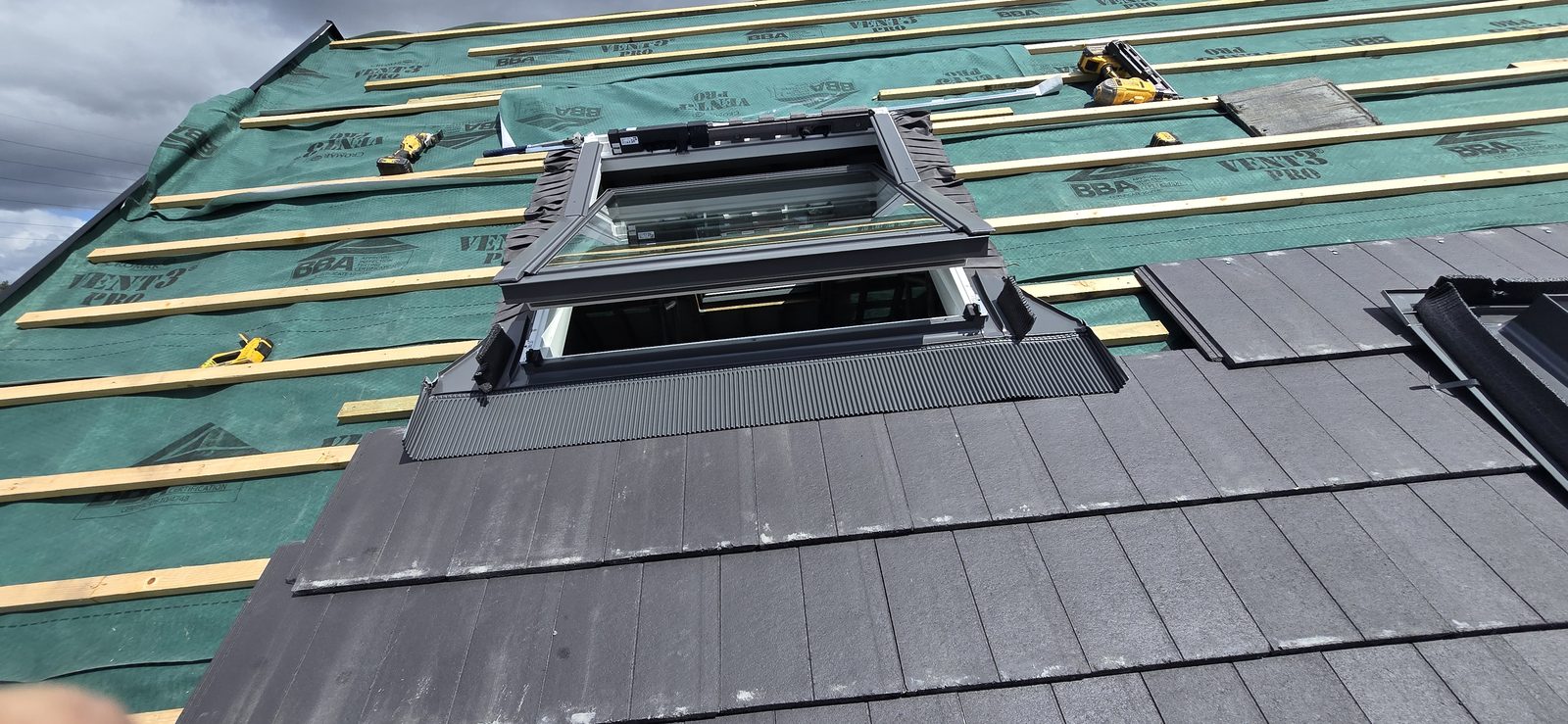
We then covered the roof in Cromar Vent3 Pro breathable membrane and re-battened it throughout. A breathable membrane lets moisture escape from the loft rather than trapping it, which is why it has replaced the old sealed felt on modern roofs.
Roofline first
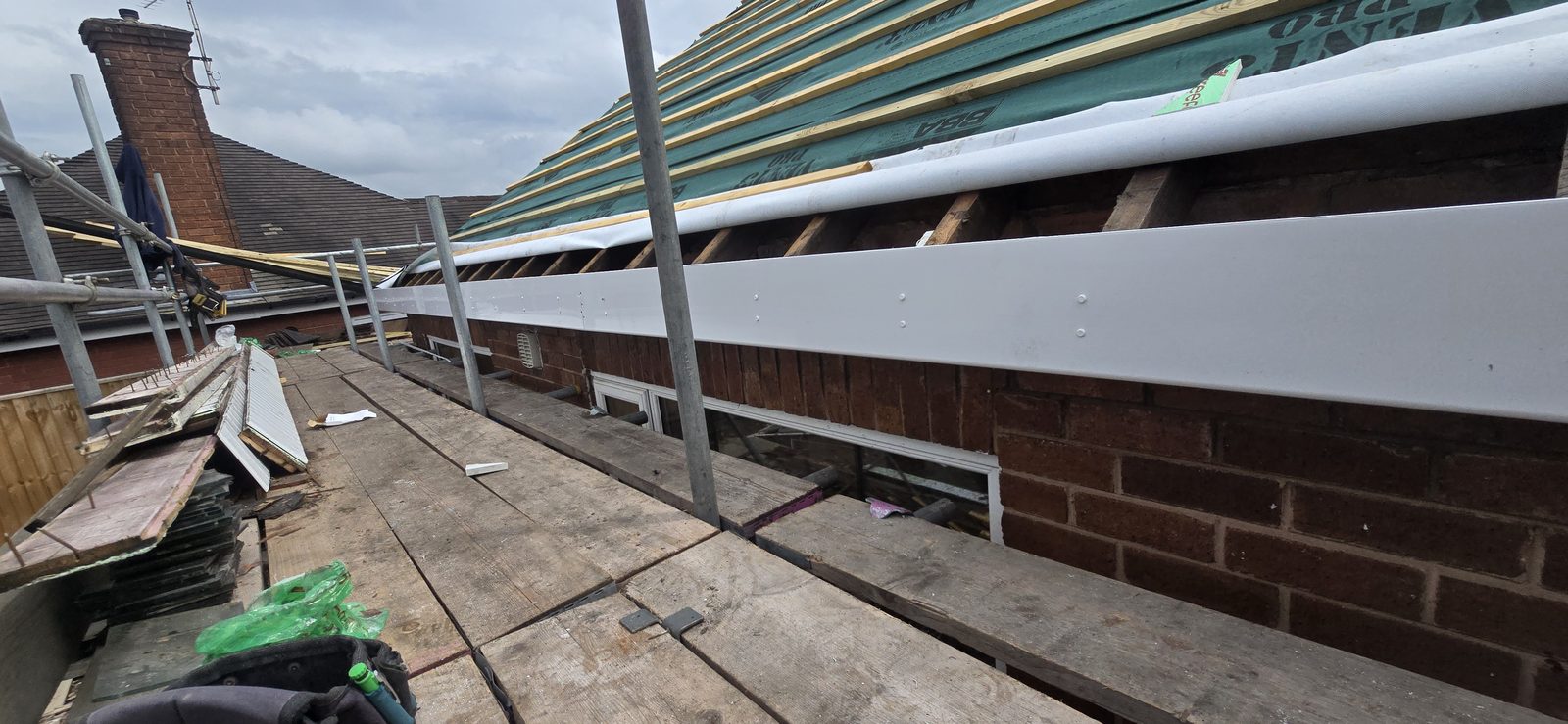
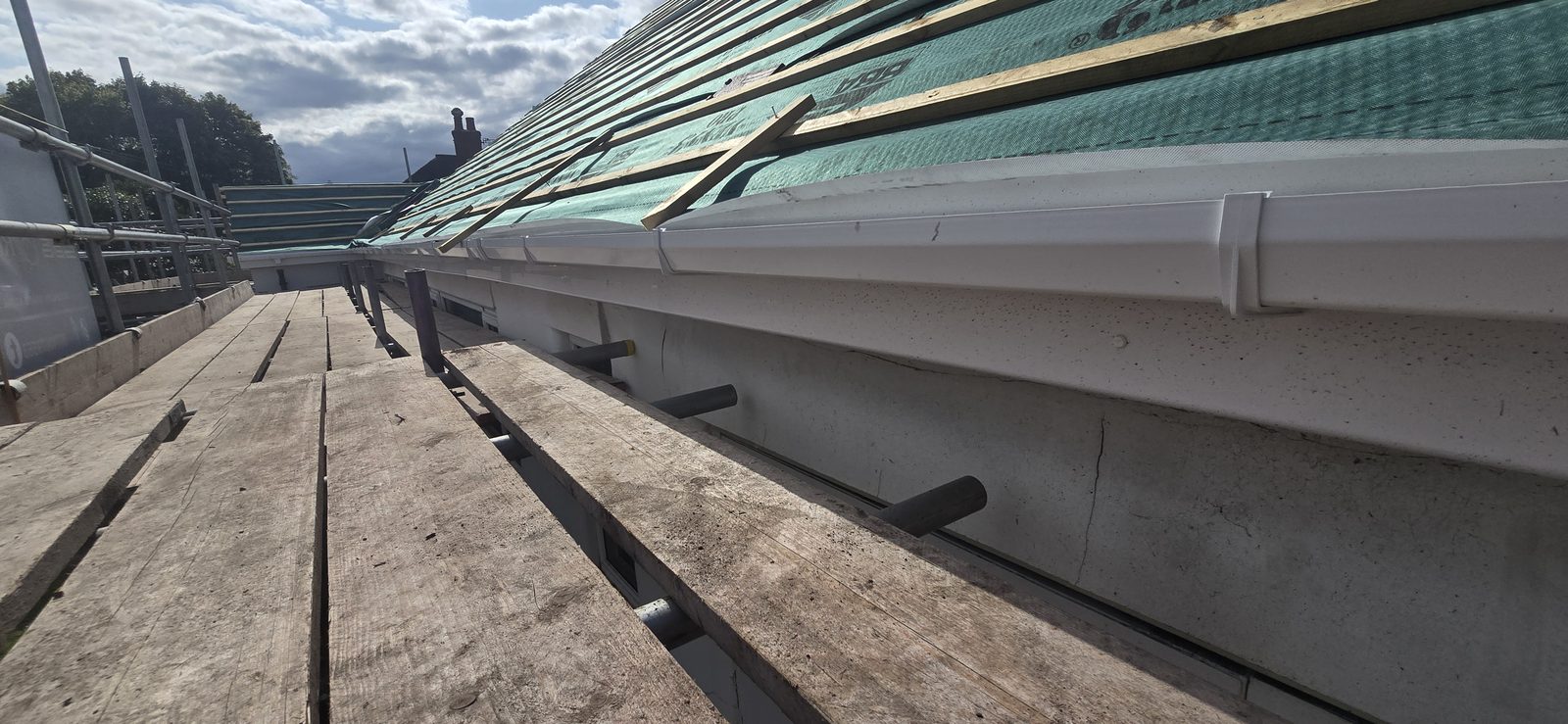
New UPVC fascias, soffits and guttering went on right round the property before tiling started, so the eaves detail and the first course of tiles could be set to the new boards.
Tiling and roof windows
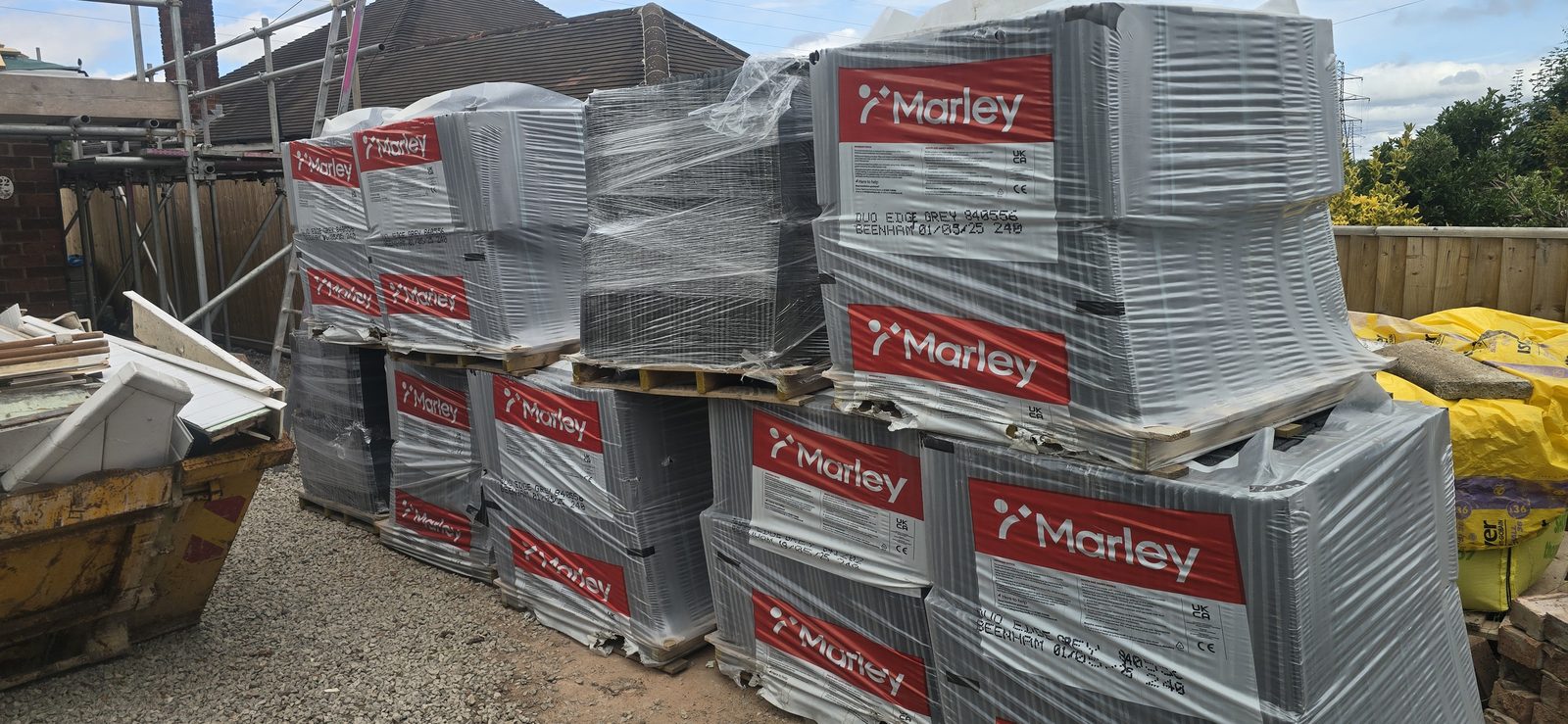
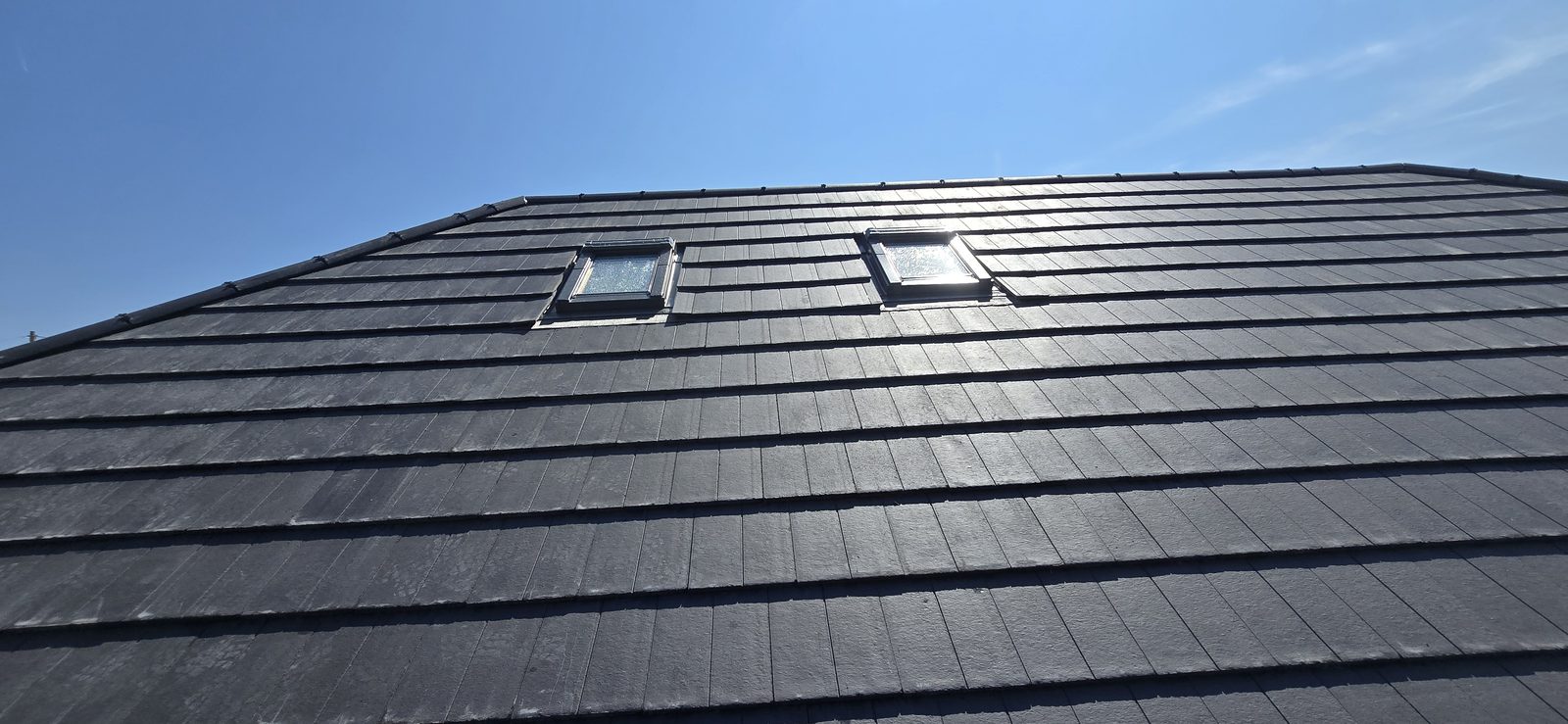
The roof is finished in Marley Duo Edgemere interlocking tiles in grey — a slate-style tile that gives the clean lines of slate at a lower cost than natural slate.
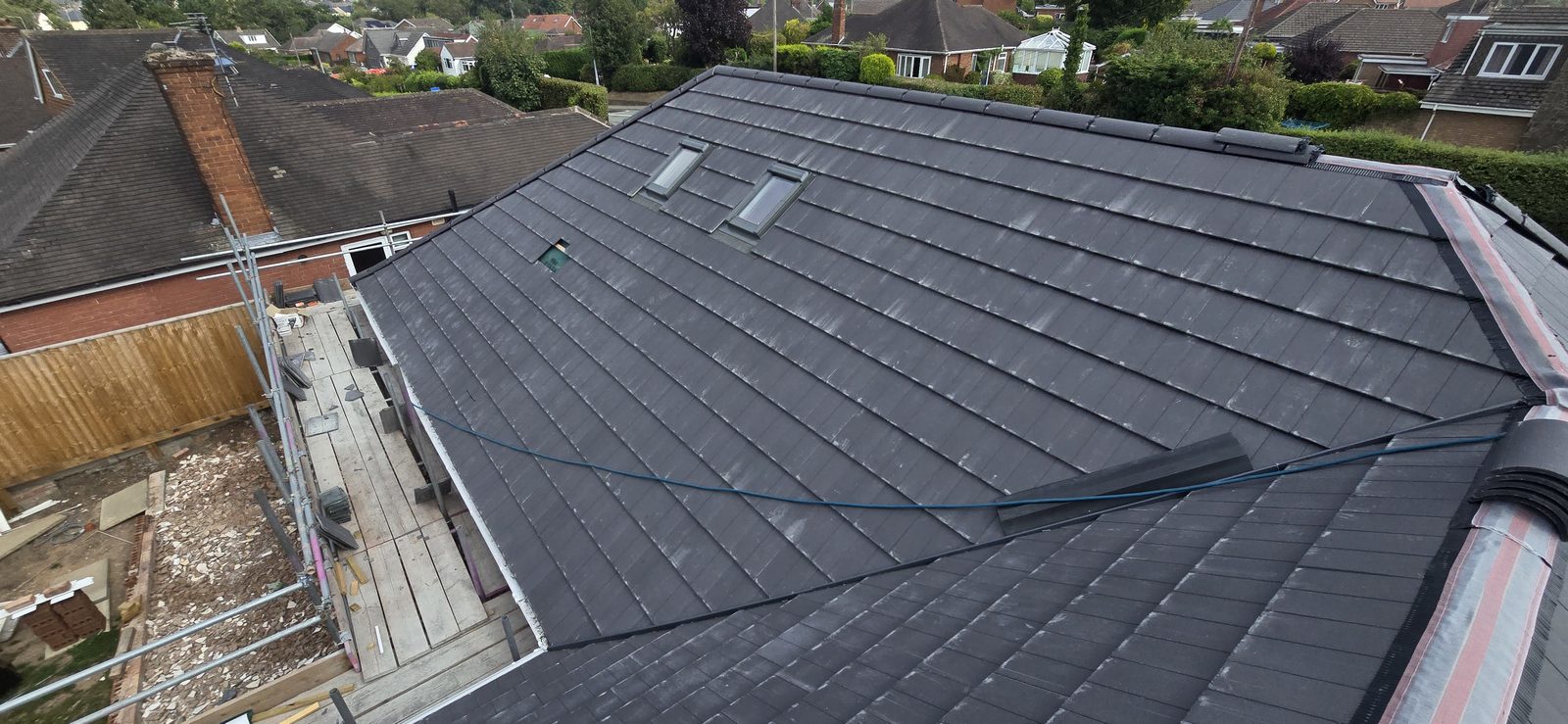
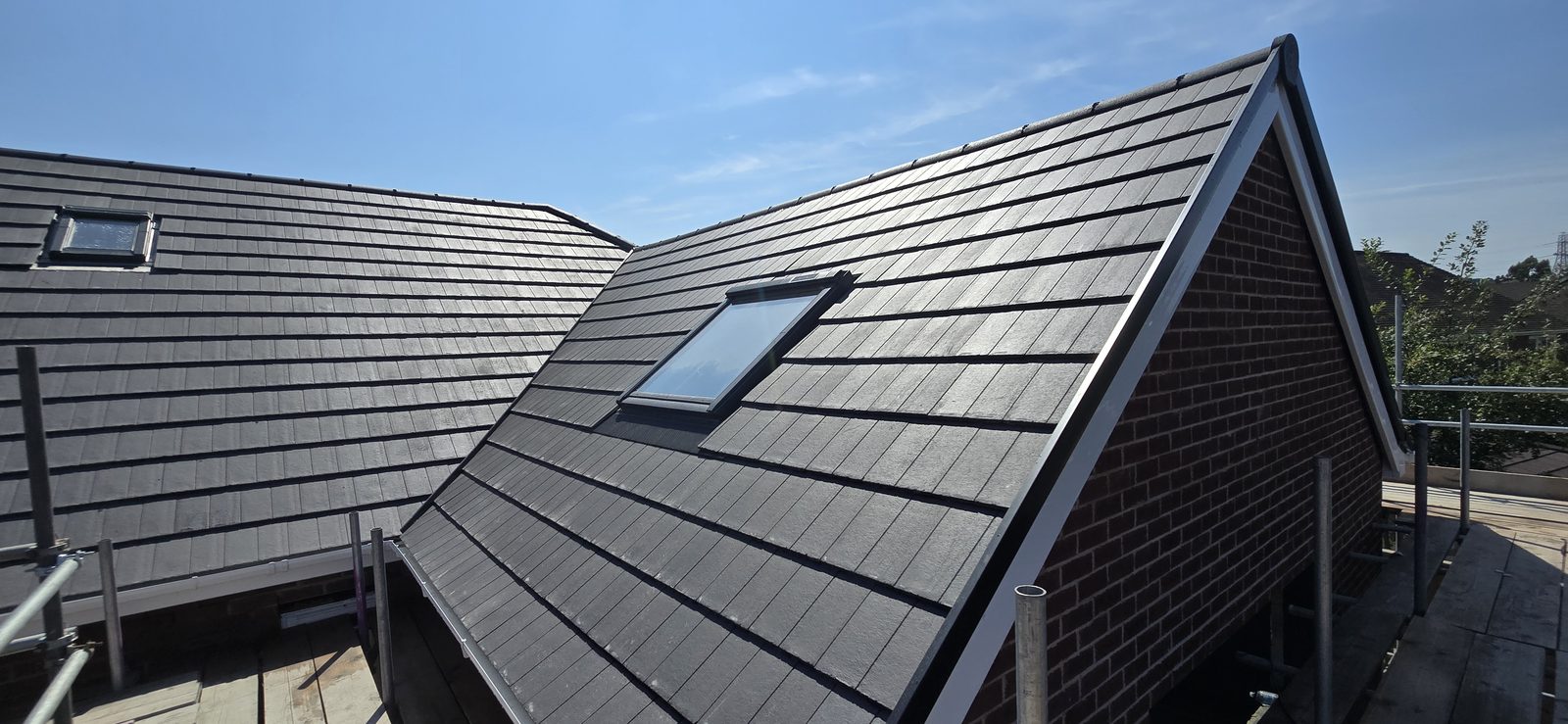
Three roof windows went in: two on the rear slope of the main roof and one on the extension. Each was flashed in as the tiling progressed, rather than cut in afterwards.
Dry ridge and dry verge
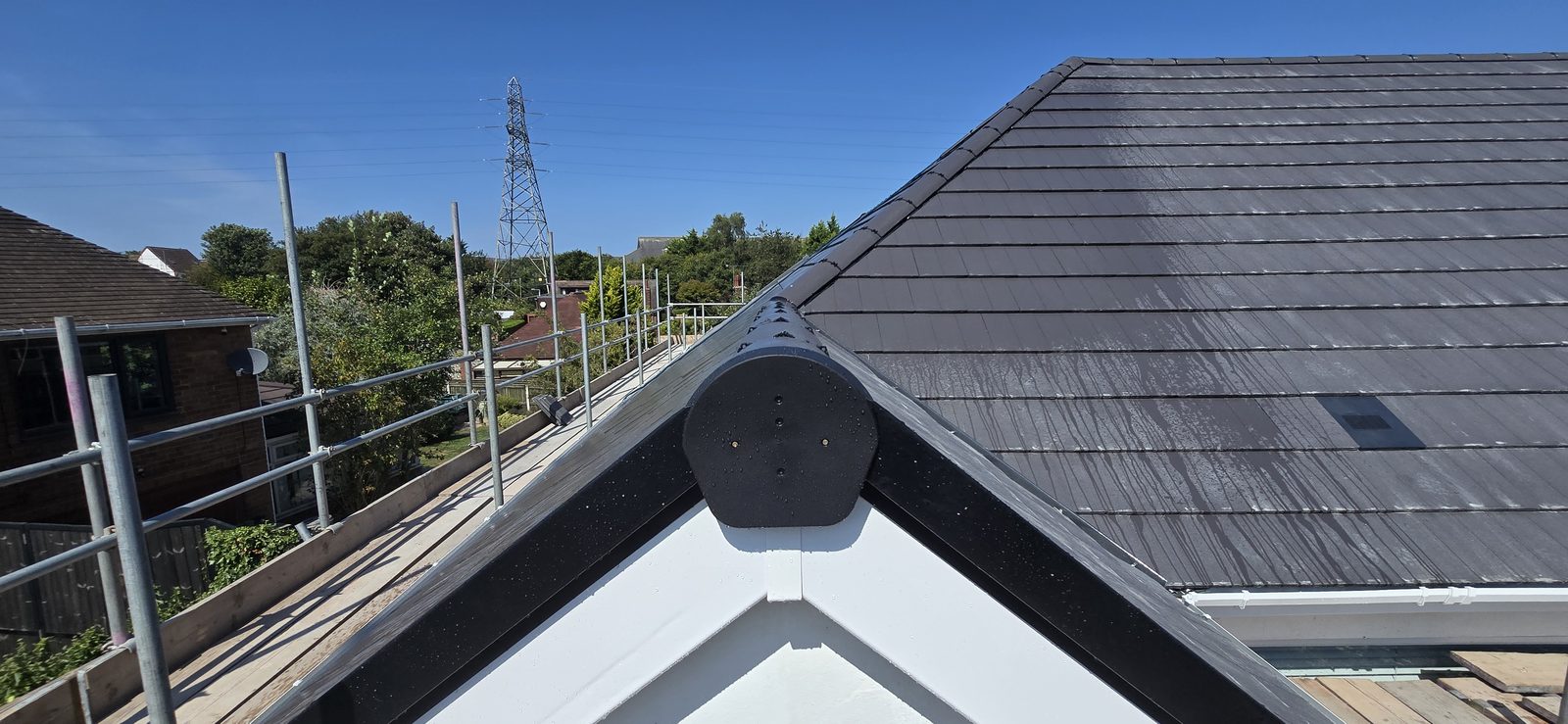
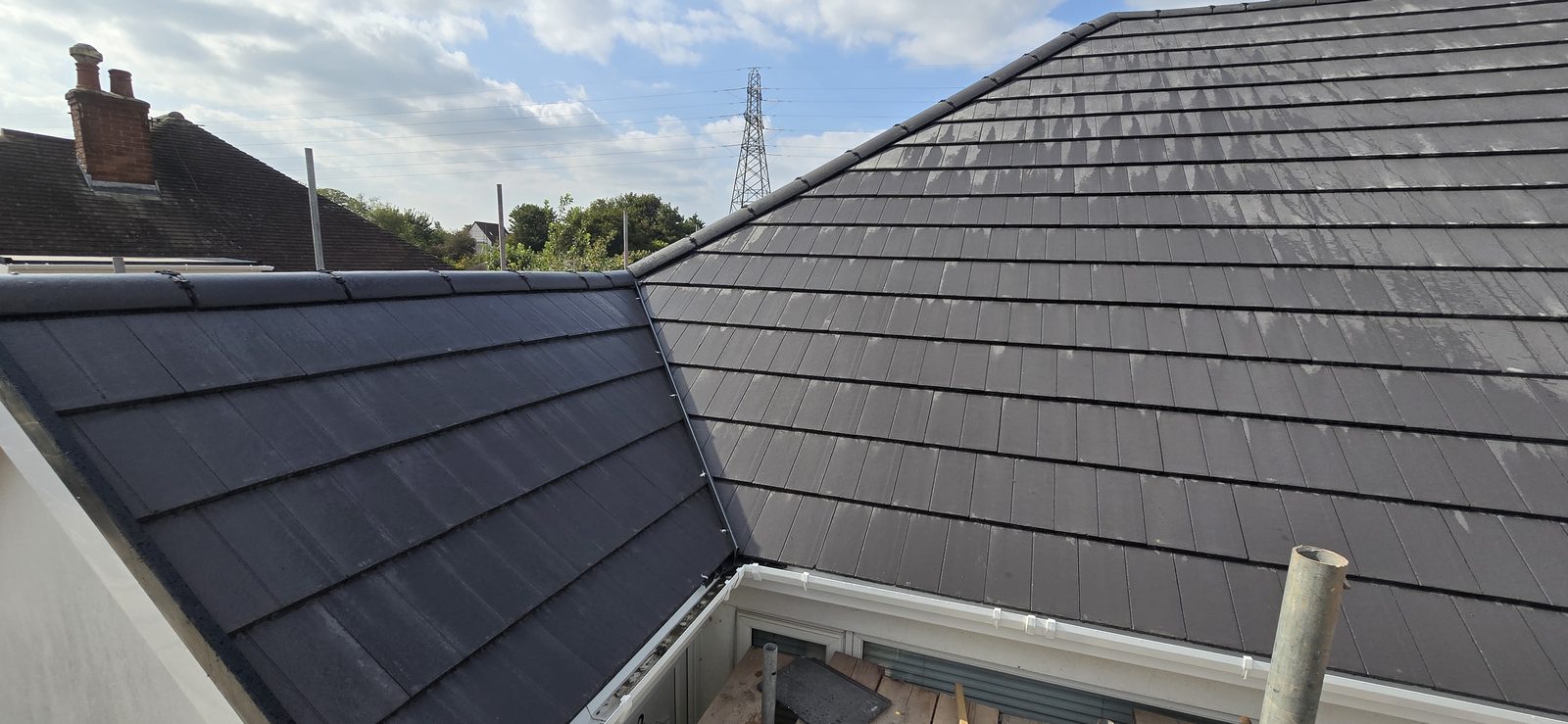
The ridge and hips were finished with a mechanically fixed dry ridge system, and the gable ends with a combination of continuous and single dry verge.
Mortar-bedded ridges and verges crack with movement and weather, and re-bedding them is one of the most common repairs we get called out to. A dry system is fixed mechanically, so there's no mortar at the ridge or the roof edge to crack and fall away. It's designed to minimise routine maintenance — which is exactly what you want on a roof you don't plan to think about again for a long time.
The result
Ten days, start to finish.
A complete roof with a modern breathable membrane, new roofline, three new roof windows, and ridges, hips and verges that are fixed rather than bedded. The extension doesn't look like an add-on — it reads as part of the original roof.
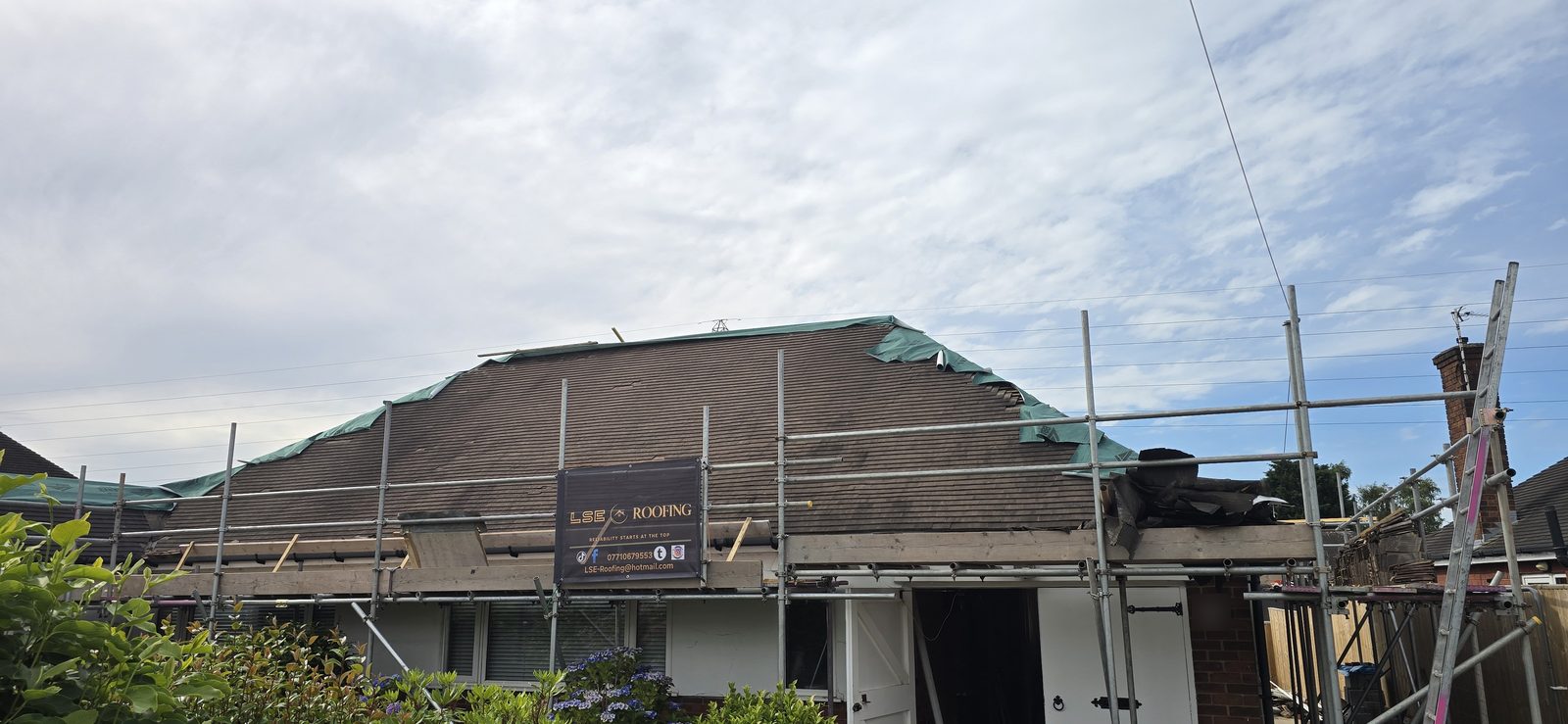 Before
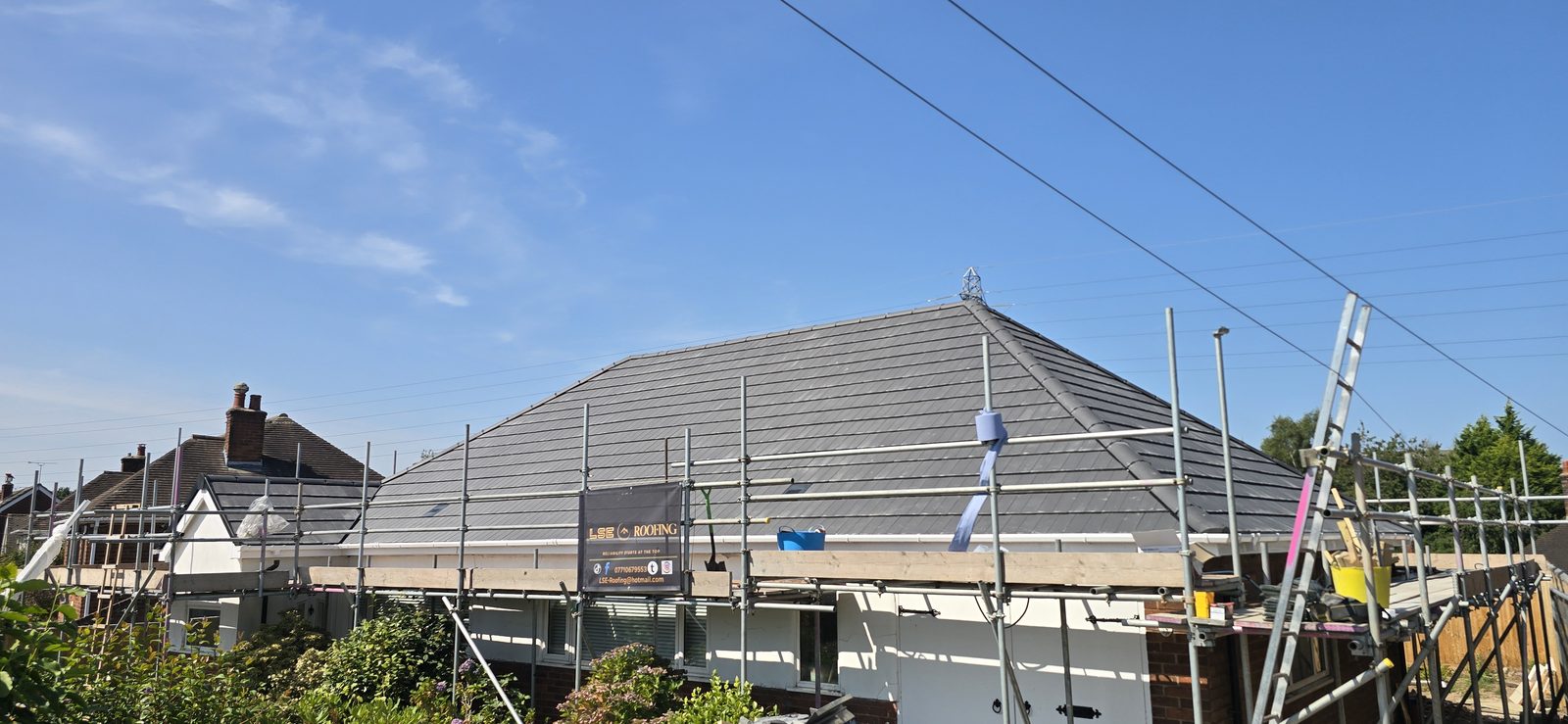 After
After
If your property is a similar age and you've never seen what's under the tiles, it's worth finding out before winter. Many bungalows and semis of this era around Hawarden, Deeside and Buckley were built with bitumen felt, and it doesn't last for ever. We'll tell you honestly whether you're looking at a repair or a re-roof — and we won't recommend a new roof to someone who doesn't need one. Read more about how we approach re-roofing or roof inspections.
Worried about a roof in Hawarden or Deeside?
Call to talk it through, or request a quotation and we'll come and look at the roof properly.