
Dry ridge and dry verge systems
Mechanically fixed ridge and verge replacing failed mortar bedding, across Flintshire, Deeside, Chester and Wrexham. Nothing left up there to crack and drop.
The problem with mortar
For most of the last century, ridge tiles and verge tiles were bedded in sand and cement. It works, and on plenty of roofs it has worked for forty years.
But mortar is rigid and roofs move. Tiles expand and contract with temperature, timber moves with moisture, and the building settles. Rigid mortar sitting across all that movement eventually cracks. Once it cracks, water gets behind it, frost does the rest, and pieces start working loose.
The visible signs: hairline cracks along the ridge line, mortar missing in sections, ridge tiles sitting unevenly, or bits of mortar turning up on the ground after a windy night.
A loose ridge tile is a heavy object at the highest point of your roof. It's worth dealing with before the weather deals with it.
How a dry system works
A dry ridge system fixes each ridge tile mechanically — screwed to a batten that runs along the ridge line — with a ventilated roll along each side sealing the join between the ridge tiles and the roof covering.
A dry verge system does the same at the gable ends, with units that clip or screw over the edge tiles and close the gap without any mortar at all.
Two things follow from that. First, nothing up there is relying on mortar, so there's nothing to crack or fall. Second, a dry ridge is ventilated by design, which contributes to airflow at the top of the roof space.
Ridge or verge — or both
| Dry ridge | Along the main ridge line, and along hips where appropriate. Replaces bedded ridge tiles. |
|---|---|
| Dry verge | At the gable ends. Replaces mortar-bedded verge and the mortar under the edge tiles. |
| Re-bedding | Where a dry system isn't suitable — some tile profiles and older roofs — we'll re-bed properly instead and say why. |
| Ridge ventilation | Airflow at the ridge, which matters more on roofs where the eaves ventilation is limited. |
Systems are made by several manufacturers and are designed around specific tile profiles. What suits your roof depends on what's on it, and we'll confirm the system with the quotation rather than fitting whatever happens to be in the van.
When it's worth doing
- Ridge mortar visibly cracked, hollow-sounding or missing in places.
- Ridge tiles sitting unevenly or moving when handled.
- Mortar debris appearing in the gutters or on the ground.
- You're already having a re-roof or roofline work done and the scaffold is up.
- You'd rather not think about the ridge again for a very long time.
Ridge and verge work needs access to the very top of the roof, which means scaffolding on most properties. If you've got a scaffold going up for anything else, that's the moment to deal with the ridge. Doing it as a standalone job later means paying for the access a second time.
What affects the price
- Length of the ridge, and whether hips are included.
- Number and length of gable ends for verge work.
- Whether the existing ridge tiles can be re-used or need replacing.
- Scaffolding and access.
- Property height and roof pitch.
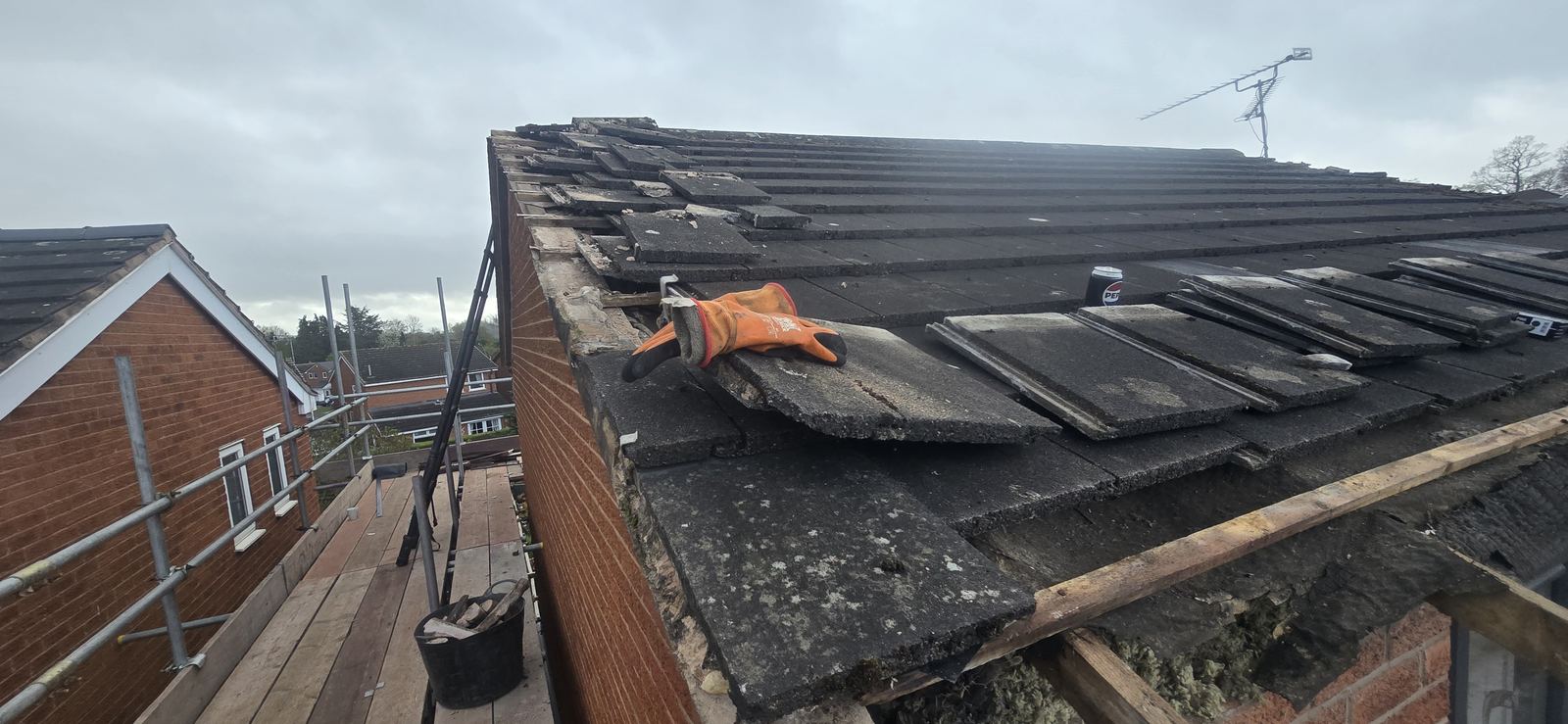 Mortar removed
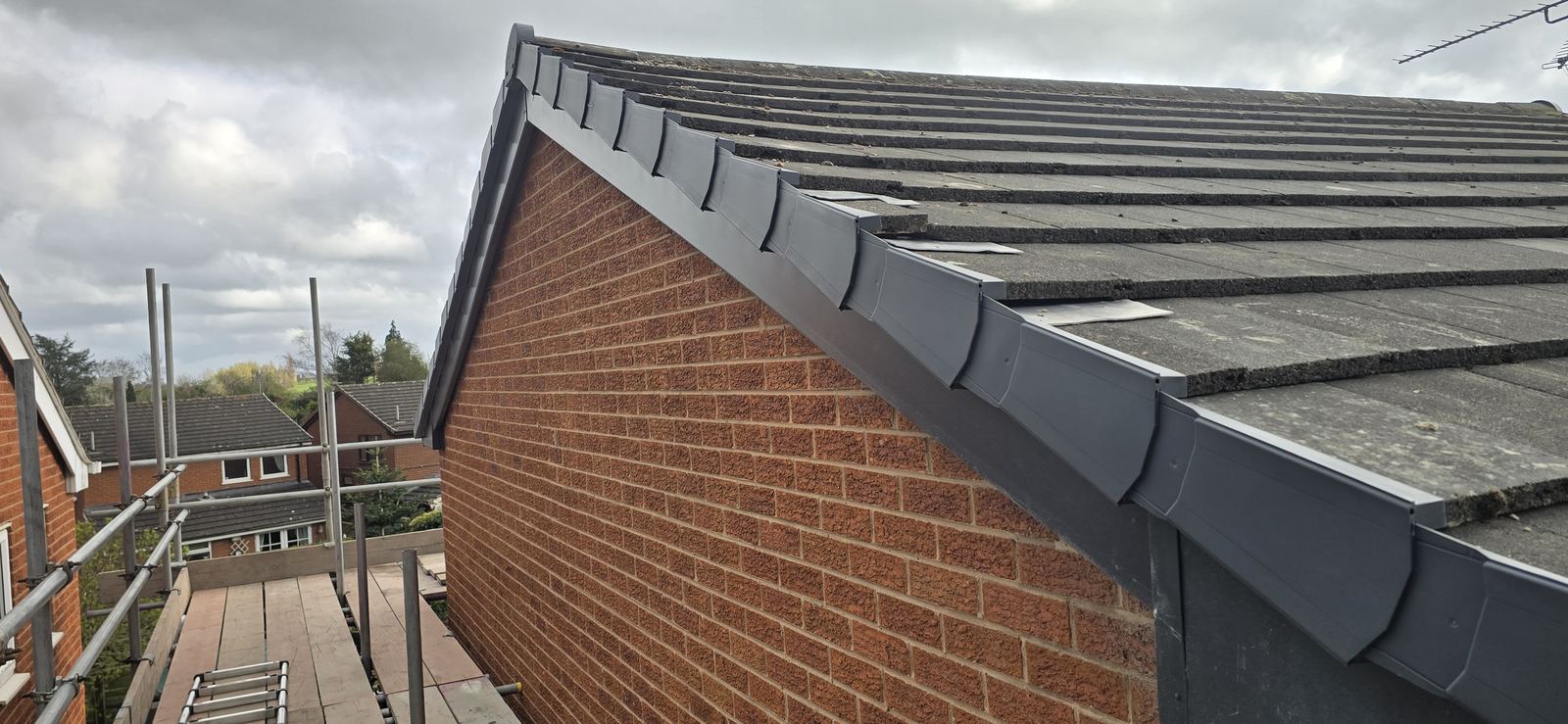 Dry verge fitted
What people ask about dry ridge and dry verge.
Is dry ridge better than mortar?+
On most modern tiled roofs, yes — because it doesn't rely on a rigid material to cope with a roof that moves. Mortar bedding, done well, is still perfectly legitimate on the right roof, and there are situations where it remains the appropriate choice. We'll tell you which yours is.
Can my existing ridge tiles be re-used?+
Often yes, if they're sound. They get lifted, cleaned off and re-fixed on the new system. Where tiles are cracked or damaged they'll need replacing, and we'd tell you that when quoting rather than after.
How long does a dry ridge system last?+
Manufacturers publish expected service lives and warranties for their systems, and they're long. We'll tell you what the manufacturer states for the system going on your roof and pass their documentation through to you. What we guarantee is our workmanship.
Does it need any maintenance?+
Very little. There's no mortar to fail, so the routine re-bedding an older roof needs disappears. It's still worth a look every few years, as with any part of a roof.
Will it look different?+
From the ground, only slightly. Dry verge units have a defined edge that some people prefer to a mortar line and some don't. It's worth looking at photographs before deciding — we can show you finished examples.
Can it be done on any roof?+
Not every roof. Systems are designed around particular tile profiles, and some older or unusual coverings aren't catered for. If yours isn't suitable we'll say so and re-bed properly instead.
Mortar cracking at the ridge or gable?
It won't get better on its own. Call and we'll come and look at whether a dry system is the right answer for your roof.