Chimney work and leadwork
Repointing, re-flaunching, removal and reduction, plus lead flashings, soakers and valleys. The details that cause most of the leaks we get called out to.
Why chimneys cause so many leaks
A chimney is a hole punched through a roof. Everywhere the brickwork meets the covering has to be sealed with lead, and everywhere the brickwork is exposed it takes weather from all four sides and from above.
When someone rings us about a damp patch on a bedroom ceiling, the chimney is one of the first places we look.
What typically fails
- Flaunching — the mortar cap on top of the stack that holds the pots. It cracks, water gets in and works its way down inside the stack.
- Pointing — mortar joints erode, especially on the weather side, letting water into the brickwork.
- Spalling brickwork — brick faces blowing off after water has got in and frozen.
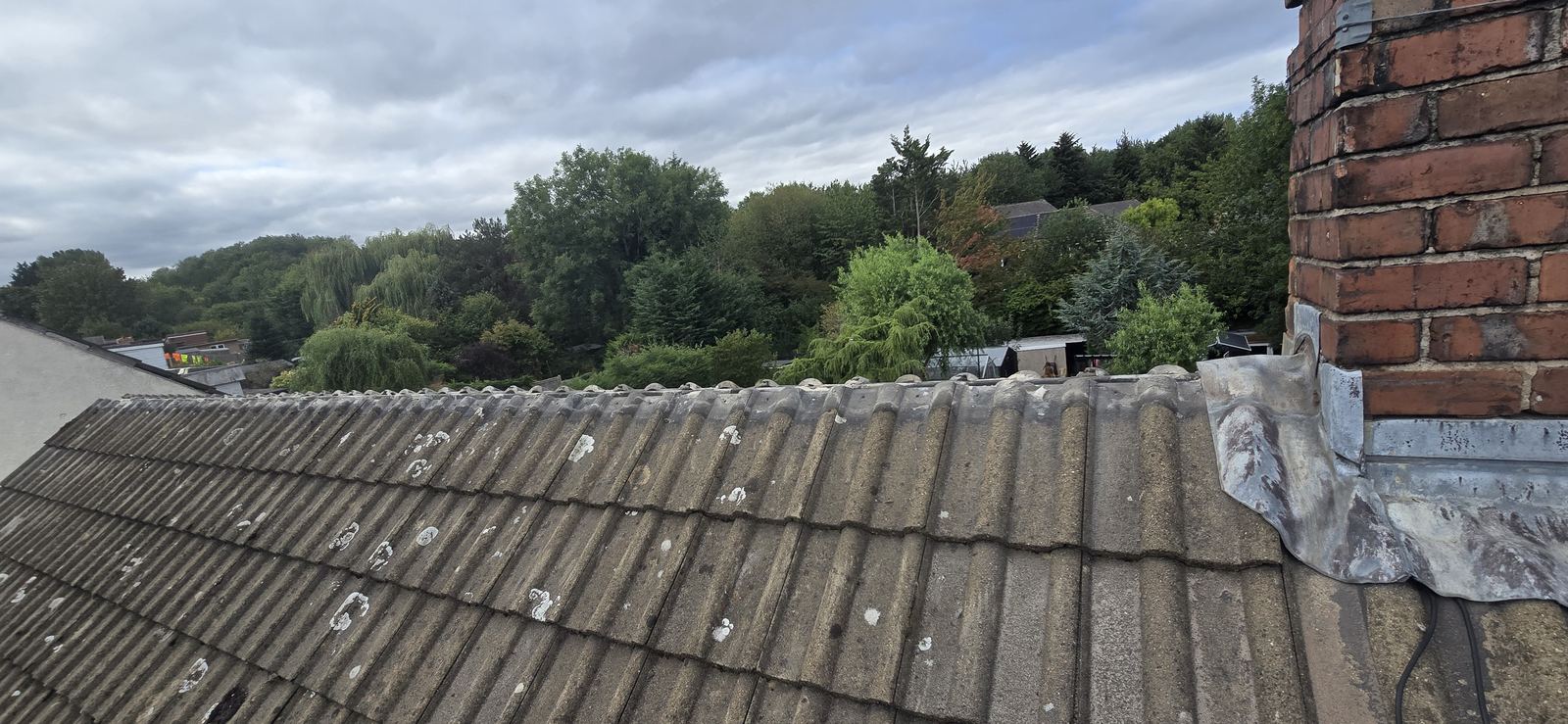
- Lead flashings — stepped flashing lifting out of the joints, front aprons splitting, back gutters blocked or perished.
- Mortar fillets — where a previous repair used sand and cement instead of lead. These always crack eventually.
If your chimney is sealed to the roof with a wedge of mortar rather than lead, it's a repair waiting to fail. Mortar and roof coverings move at different rates and the joint cracks. Lead moves with the building, which is why it's still the right material after several hundred years of use.
Chimney work we carry out
| Repointing | Raking out failed joints and repointing the stack in a suitable mortar. |
|---|---|
| Re-flaunching | Removing the old cap and forming a new flaunching, with pots re-set or replaced. |
| Rebuilding | Taking down and rebuilding stacks where the brickwork has gone beyond repointing. |
| Reduction | Reducing a redundant stack below roof level and weathering it in properly. |
| Removal | Full removal of a redundant stack, with the roof made good and tied back in. |
| Capping | Capping and venting disused flues so the stack stays dry but the flue can still breathe. |
Leadwork
Lead is used at every junction where a roof meets something else. Done properly it lasts decades. Done badly — wrong code, over-long pieces, no allowance for movement — it splits and you're back to square one.
- Stepped flashings and soakers to chimneys and abutments.
- Front aprons and back gutters to chimney stacks.
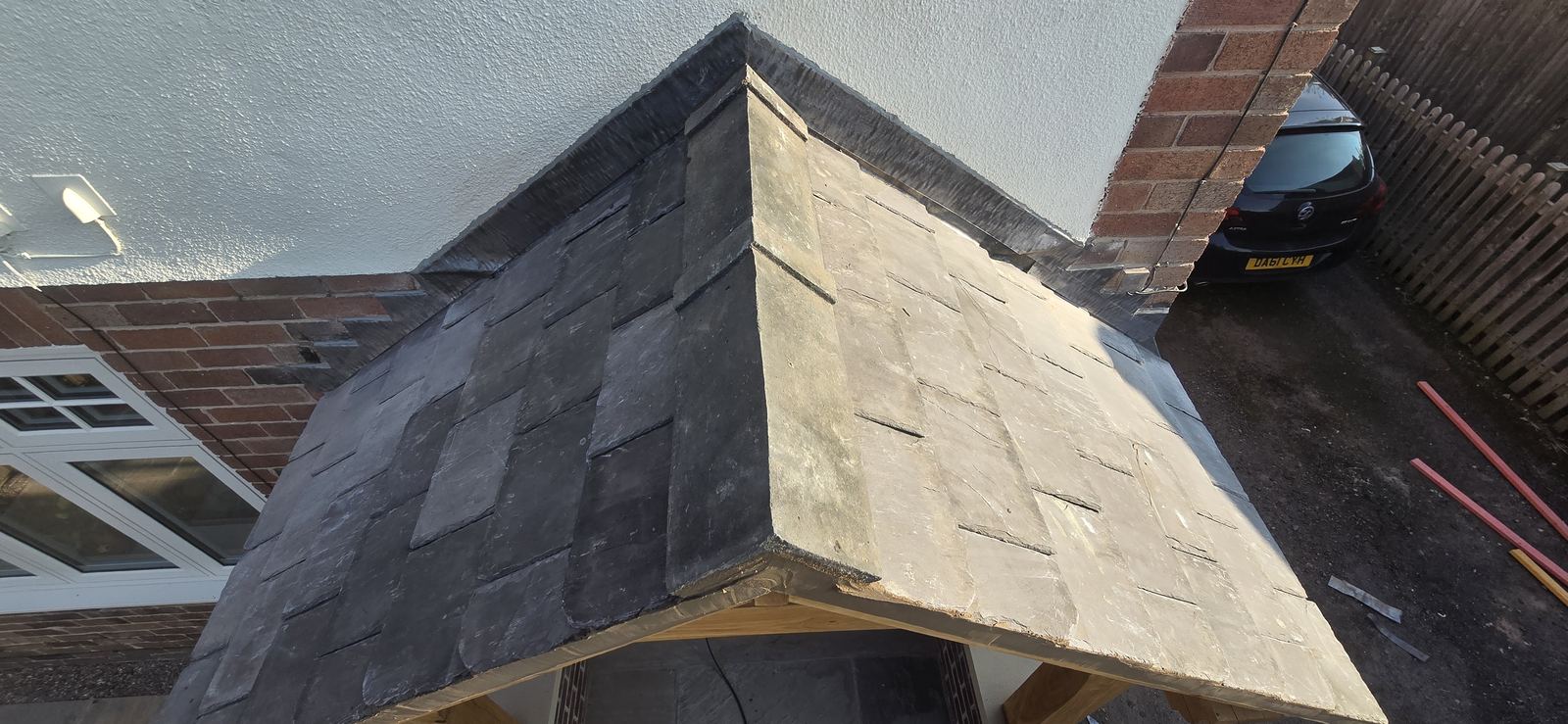
- Lead valleys, formed and laid in appropriate lengths.
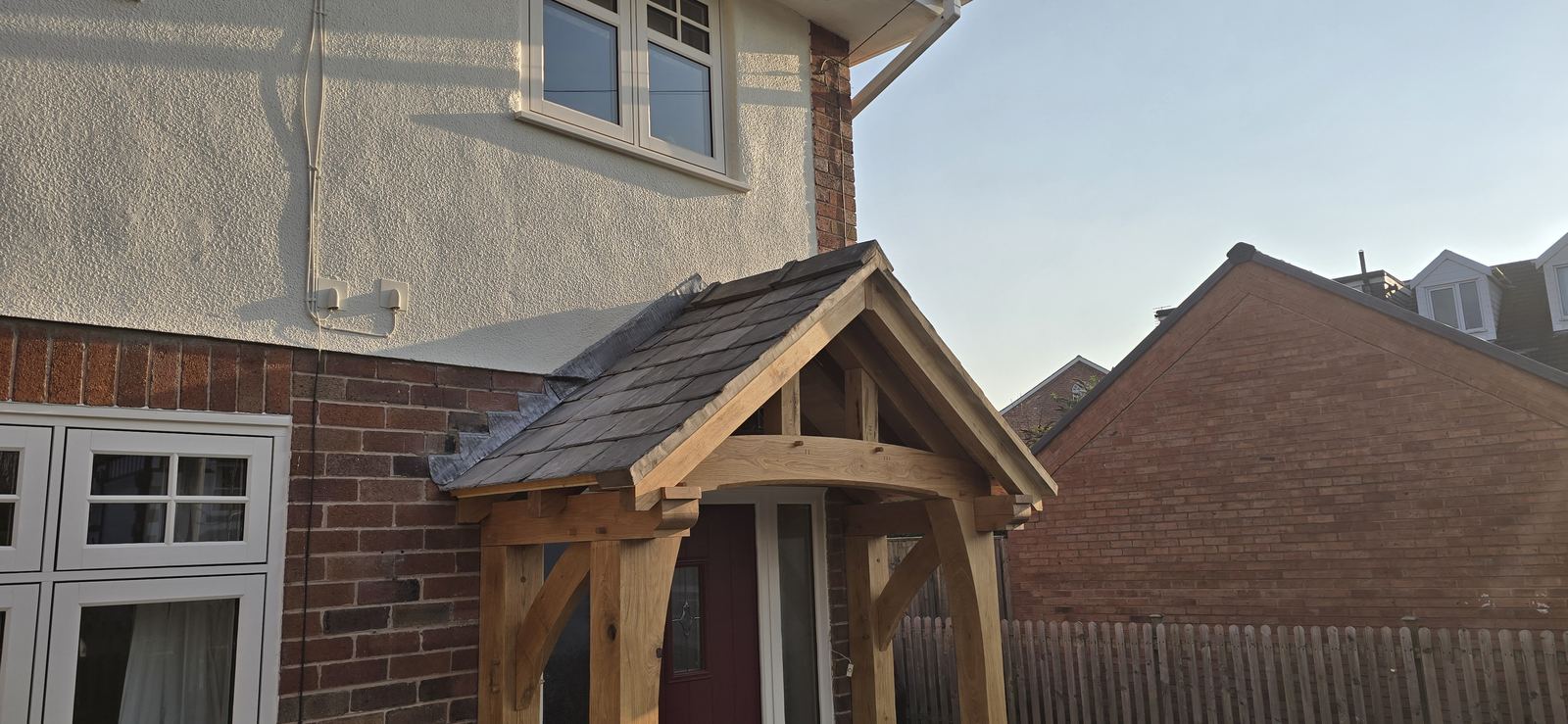
- Abutment flashings where a roof meets a wall — extensions, dormers and porches.
- Cover flashings to flat roof upstands.
- Dormer and bay work, including lead cheeks and tops.
Lead is specified by code, which describes its thickness. The right code for a given detail depends on what it's doing and how much movement it has to accommodate — that's a judgement made on the roof, not a one-size answer.
Removing or reducing a chimney
Redundant stacks are a common source of both leaks and unnecessary maintenance. If a chimney isn't serving anything, taking it down or reducing it below the roof line removes a permanent weak point.
Two things worth knowing before you decide. First, a chimney breast may be doing structural work inside the property, and removing a stack has implications that need proper consideration — that isn't a decision to make on a roofer's say-so alone. Second, if the property is a flat, a leasehold, listed, or in a conservation area, there may be consents involved. We'll flag it if we think it applies.
What affects the price
- Height and position of the stack — a chimney at the ridge of a two-storey house is a different job from one on a single-storey extension.
- Scaffolding, which on chimney work is almost always required.
- Whether it's a repoint, a re-flaunch, a rebuild or a removal.
- The amount and code of lead involved.
- Making good the roof covering afterwards.
What people ask about chimney and lead work.
How do I know if my chimney is causing the leak?+
Often you can see it from the ground with a zoomed-in photo — cracked flaunching, mortar missing from the joints, or lead lifting away from the brickwork. But water travels, so the only reliable way is to get up and look. That's what an inspection is for.
Is it cheaper to remove the chimney than repair it?+
Sometimes, particularly on a stack that's badly deteriorated and no longer used. But removal has structural and sometimes planning implications that repair doesn't. We'd walk you through both options rather than steering you toward one.
Can you repoint just the bad side?+
You can, and occasionally it's the sensible call. More often the weather side has simply failed first and the rest is a season or two behind — in which case doing the lot while the scaffold is up costs less than doing it twice.
Why does lead cost so much?+
Lead is expensive as a raw material and it's slow, skilled work to form and dress properly. It's also the reason the detail lasts decades rather than years. Cheaper alternatives exist and we'll discuss them where they're genuinely appropriate.
My chimney was sealed with cement, not lead. Is that a problem?+
Usually yes, eventually. Cement fillets crack because the mortar and the roof move at different rates. It may be watertight today. It won't stay that way, and when it goes the water is already inside the structure.
Do you need scaffolding for chimney work?+
Almost always. Chimney work means handling materials at the highest point of the roof, and it isn't ladder work. It's priced separately on the quotation so you can see the cost clearly.
Chimney or lead work needed?
These are the details that cause most leaks. Call and describe what you're seeing and we'll come and look.