
This job came to us the way a lot of our best work does — through another trade. A builder in Wrexham had put an extension on the property and recommended us to fit the roof on it. While we were on site, the customer asked what we'd charge to replace the fascias, soffits and guttering on the rest of the house at the same time.
We priced it, they were happy with the quotation, and we booked it into the diary.
| Location | Wrexham |
|---|---|
| Work carried out | Full fascia, soffit, guttering and downpipe replacement; dry verge to both gable ends |
| Duration | Two days on site |
| Access | Full scaffold — GFL Scaffolding |
| Materials | Future Building Plastics |
| Completed | April 2026 |
What the customer had
Rosemary brown UPVC fascias, soffits and guttering — faded, stained along the boards, and dated. The property had anthracite windows and a newly built extension, and the brown roofline was pulling the look of the whole house backwards.
Both gable ends had the verge bedded in mortar. That's how most houses of this type were finished, and it does the job for years — but mortar moves, cracks, and eventually starts letting go.
Nothing was leaking and nothing was falling off. This was work the customer chose to do because the house looked tired, not because they were forced into it. That's usually the best time to do it, before weather damage turns a straightforward replacement into something bigger.
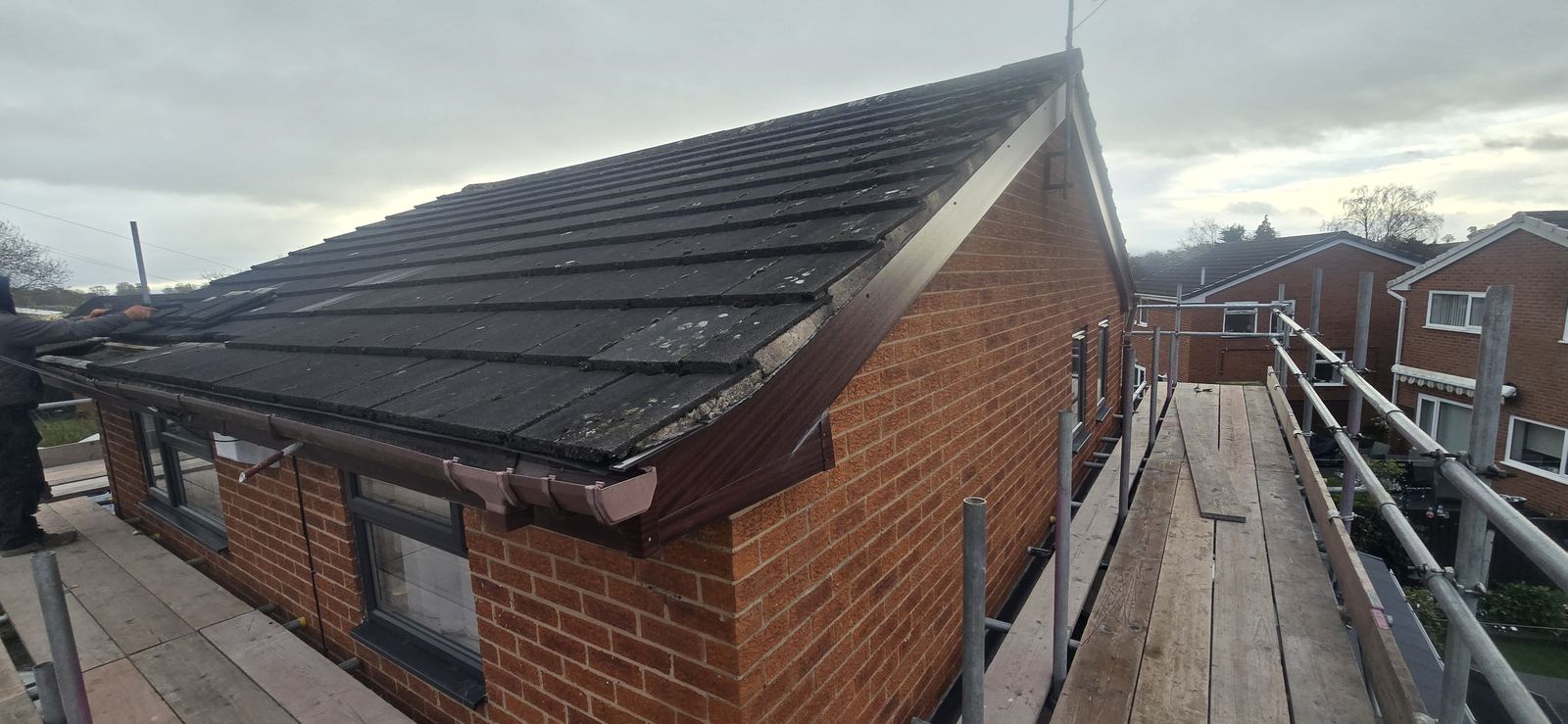 Before
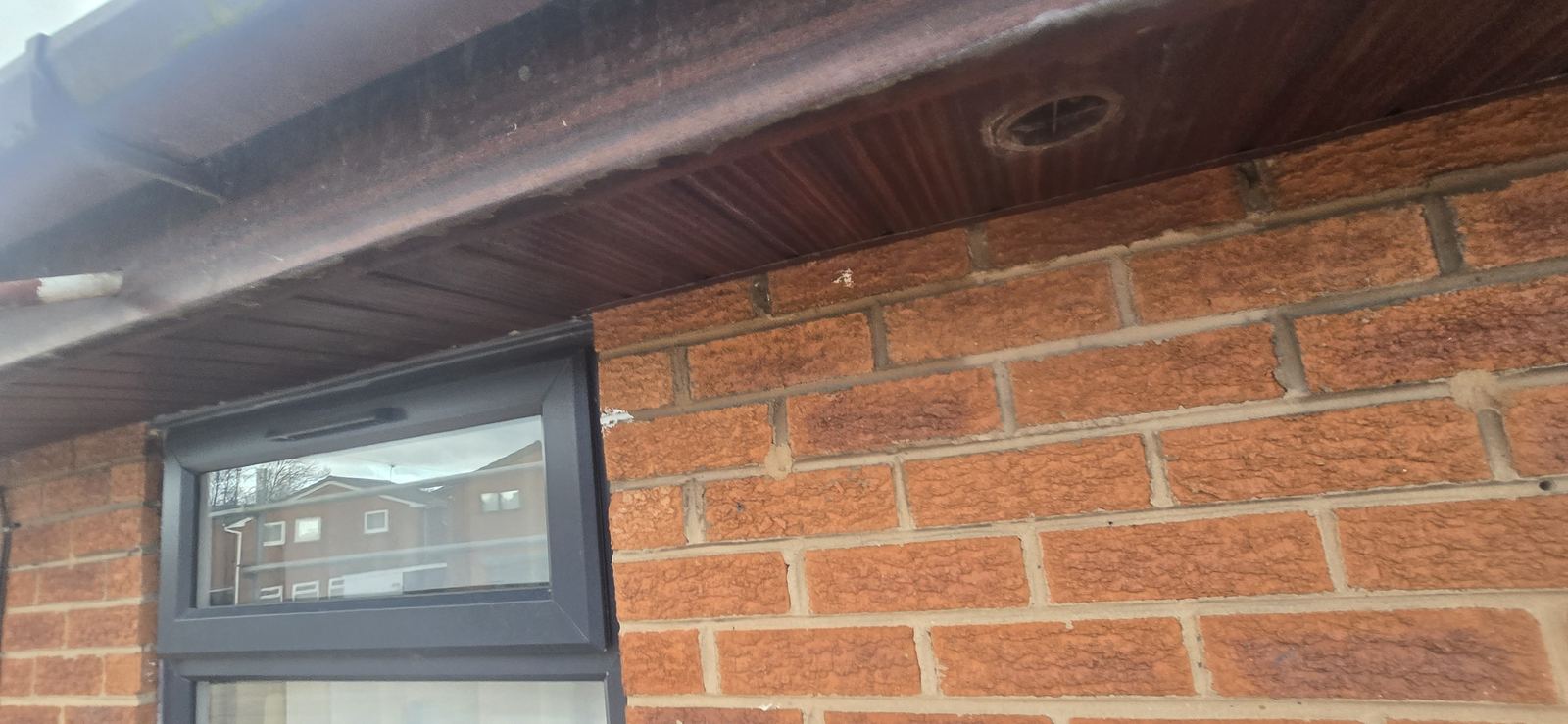 Before
Full replacement board, not capping
There are two ways to fit a UPVC roofline. The quick way leaves the existing board where it is and caps over the top of it with a thin sheet. The other way strips the old board off completely and fits a new full replacement fascia to the rafter feet.
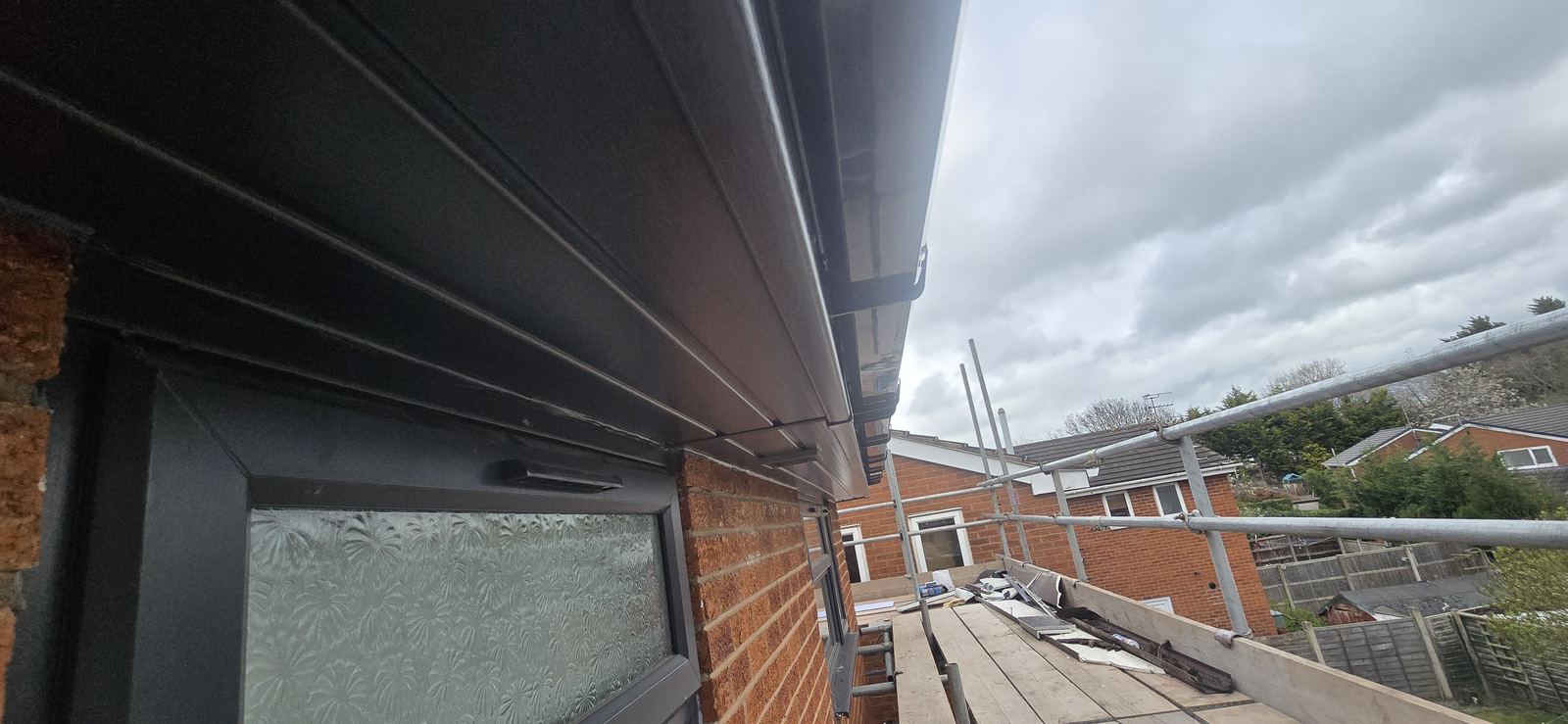
We fitted 18mm anthracite fascia throughout — a full replacement board, rigid enough to carry the guttering properly and hold its line over time.
If you're gathering quotations for this kind of work, that's the most useful question you can ask: is the old board coming off, or is it being capped over? The answers will explain most of the price difference between the quotes in front of you.
The verge
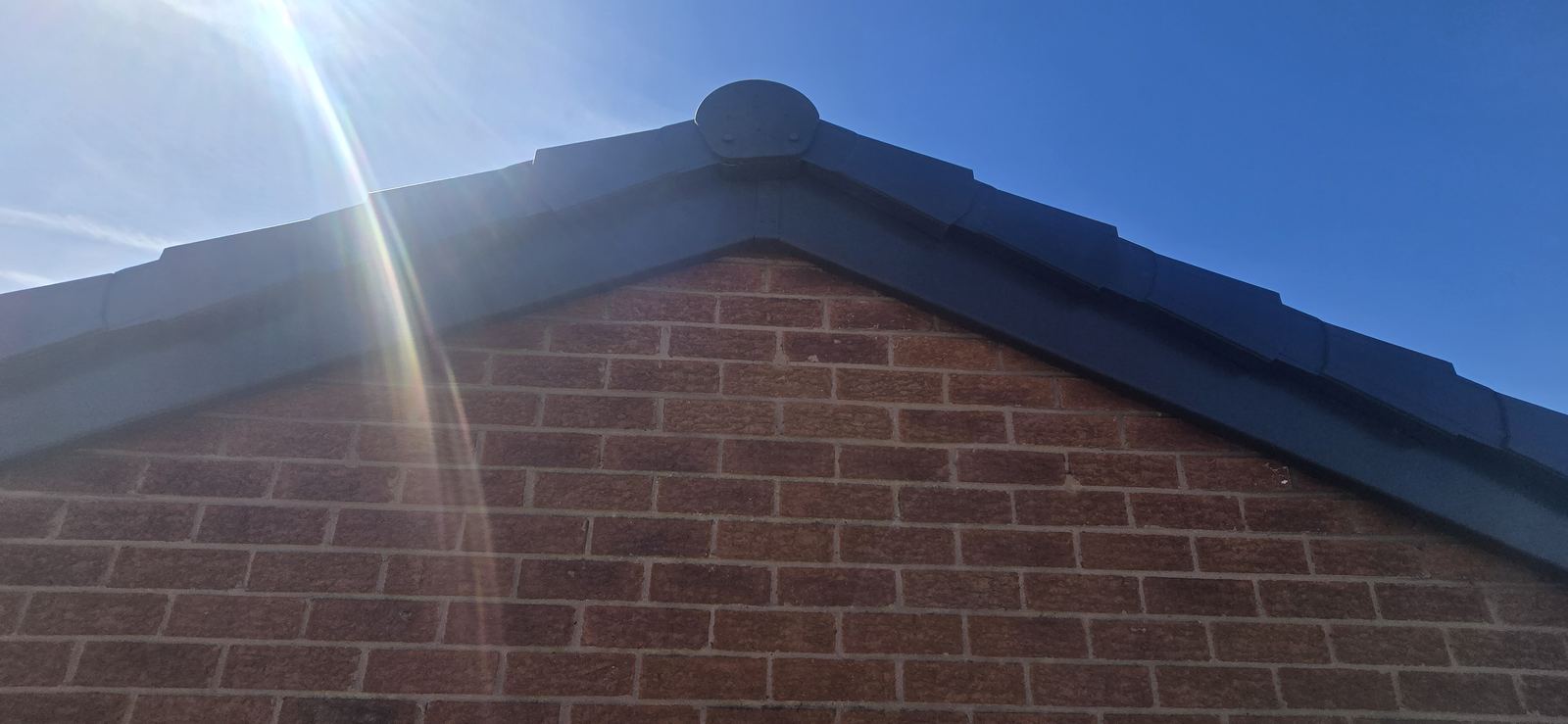
Both gables had mortar-bedded verge. We stripped it back, removed the old bedding, and fitted a dry verge system in its place.
Mortar verge has to be maintained. It cracks with thermal movement, lets water in behind it, and eventually starts dropping pieces into the garden. A dry verge clips over the verge tiles mechanically, so there's no mortar up there to fail and nothing to re-bed in five years' time.
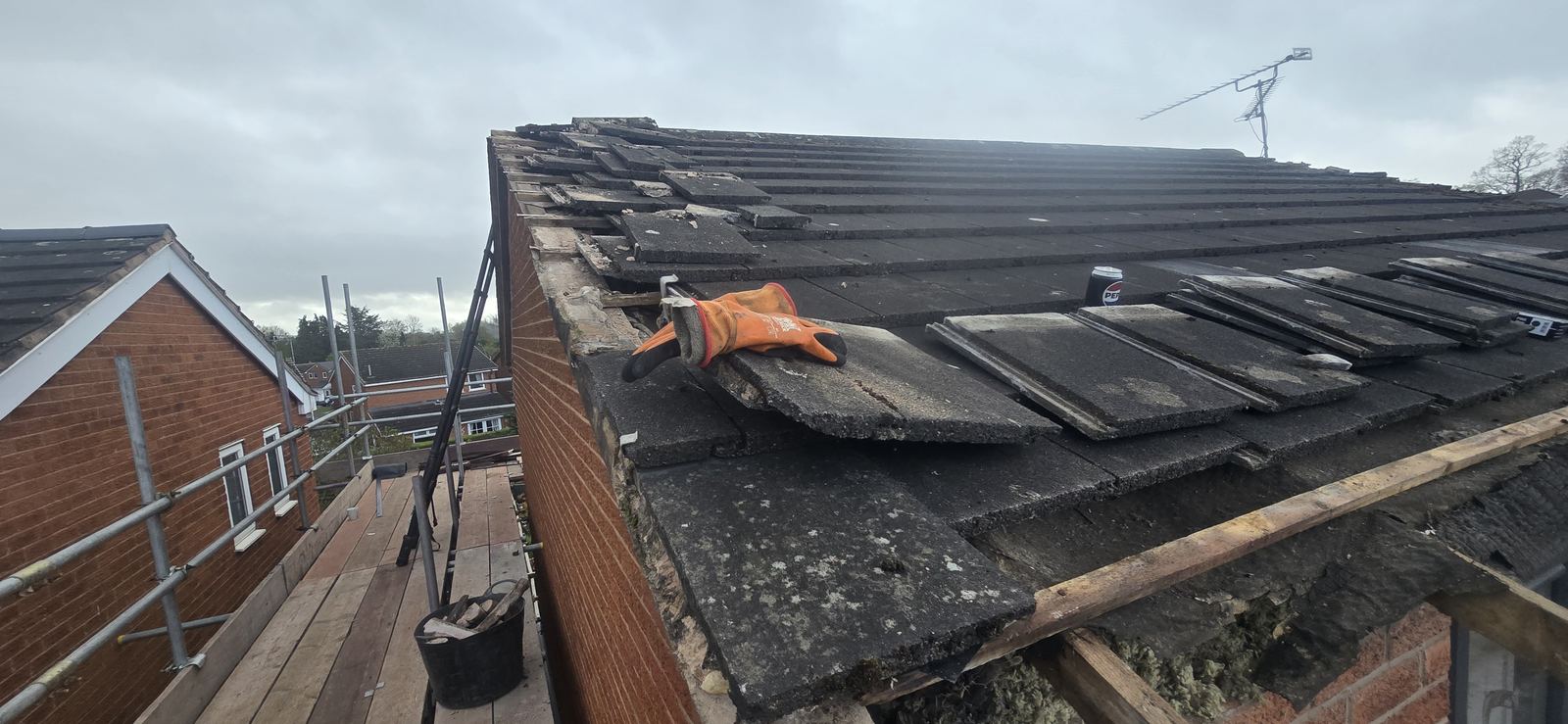
Ventilation — the part nobody sees
The original soffits had circular vents in them, letting air into the roof space. That airflow matters: without it, moisture rising from inside the house has nowhere to go, and you get condensation on the underside of the roof, damp timbers and eventually mould.
Fit a solid soffit in place of those vents with nothing to replace them and the roof space ends up sealed. The roofline looks smart and the problem develops quietly in the loft.
We fitted over-fascia vents along the eaves, which maintains the airflow without breaking up the clean line of the new hollow soffit. It's not the sort of thing a customer would ever notice from the ground — which is exactly why it's worth saying out loud.
What we fitted
- 18mm anthracite fascia, full replacement throughout
- Anthracite hollow soffit, to keep the shadow lines consistent across the property
- Over-fascia vents along the eaves
- Anthracite guttering and downpipes
- Dry verge system to both gable ends
Access and scaffolding
Both sides of the property had extensions, which meant there was nowhere safe or sensible to stand a ladder for most of the run.
We brought in GFL Scaffolding and worked off a full scaffold throughout. It adds cost to a quotation, and customers reasonably ask whether it's really necessary. Here it genuinely was — but even where it isn't strictly essential, working off a scaffold means the job flows properly, materials can be handled safely, and the work is finished in a fraction of the time it takes repositioning ladders all day.
Scaffolding is always shown clearly and separately on our quotations. There are no surprises after the work has started.
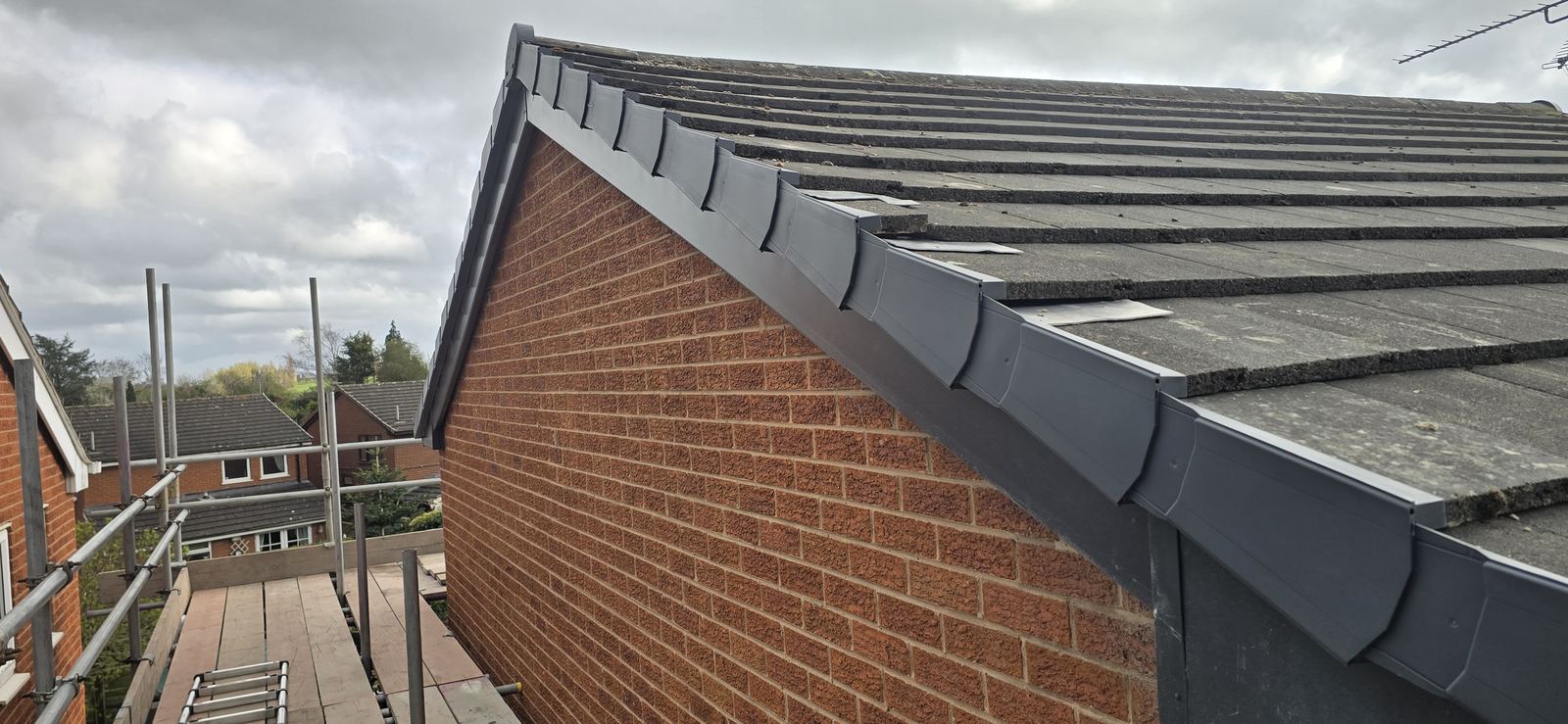
The result
Two days, start to finish.
The property went from dated brown boards to a clean anthracite finish that ties in with the windows and the new extension. The gables are finished with dry verge and won't need re-bedding. The eaves are properly ventilated. And the fascia is a full replacement board that will hold its line.
If your fascias, soffits or guttering are looking tired, send a few photographs from the ground and we'll tell you honestly whether they need replacing or whether they've got years left in them. Read more about how we approach roofline work.
Roofline work in Wrexham or Flintshire?
Call to talk it through, or request a quotation and we'll come and look at the property properly.