
EPDM flat roof replacement in Connah’s Quay
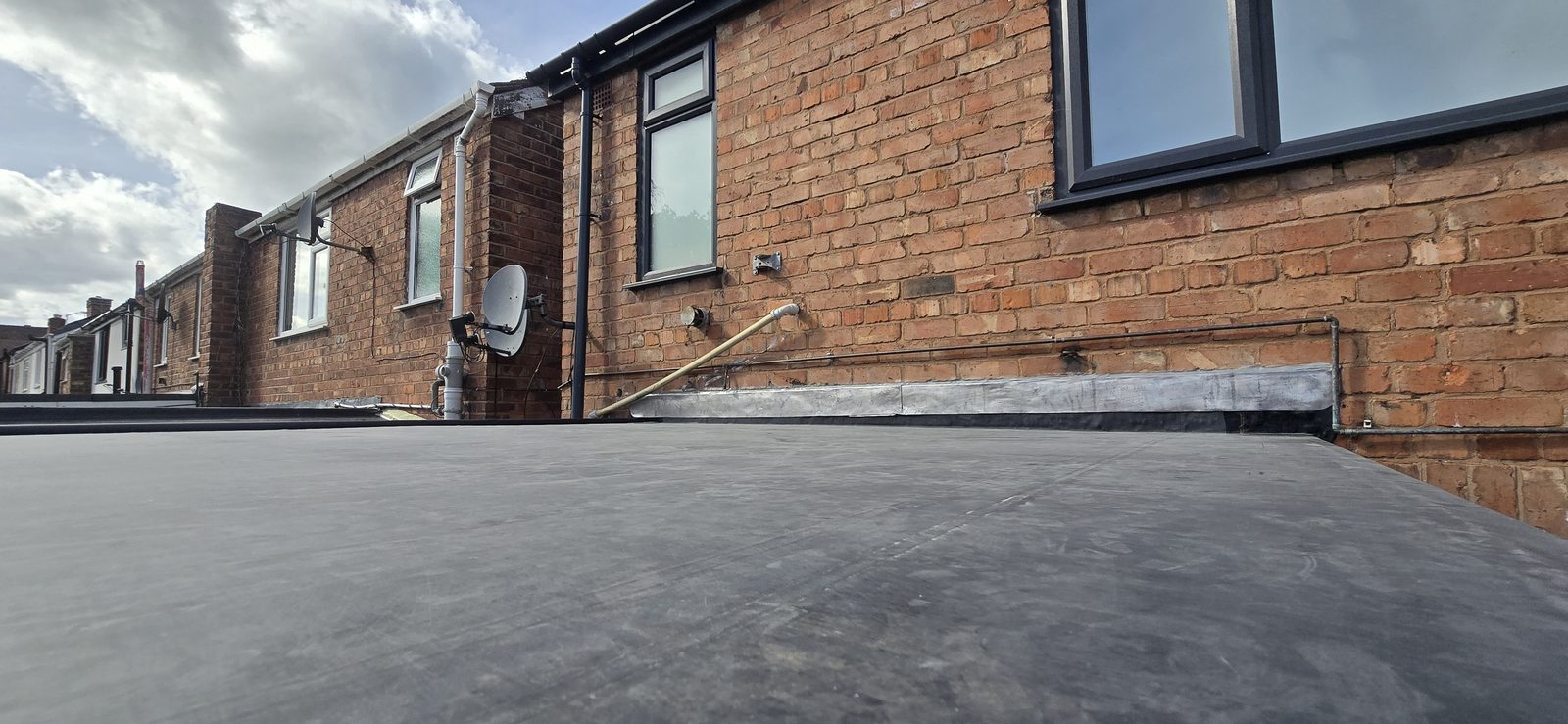
A leaking felt roof with split edges, a patched-over crack and flashing tape at the wall. Stripped back to the joists and replaced with a new deck, fully bonded EPDM rubber and lead flashing chased into the brickwork. One day, start to finish.
| Location | Connah’s Quay, Flintshire |
|---|---|
| Property | Flat roof over a single-storey rear extension |
| Work carried out | Full strip to the joists, new 18mm OSB deck, fully bonded EPDM rubber membrane, new lead flashing, new edge trims, new gutter and downpipe |
| Roof covering | EPDM rubber membrane, fully bonded with contact adhesive |
| Flashing | Code 4 lead, chased into the brickwork |
| Duration | One day |
| Guarantee | 15-year LSE Roofing workmanship guarantee |
What the customer had
A felt roof finished in loose stone chippings, and a leak that had been coming through for a while. From the ground it looked like most flat roofs of its age. Up close it was failing in more than one place at once.
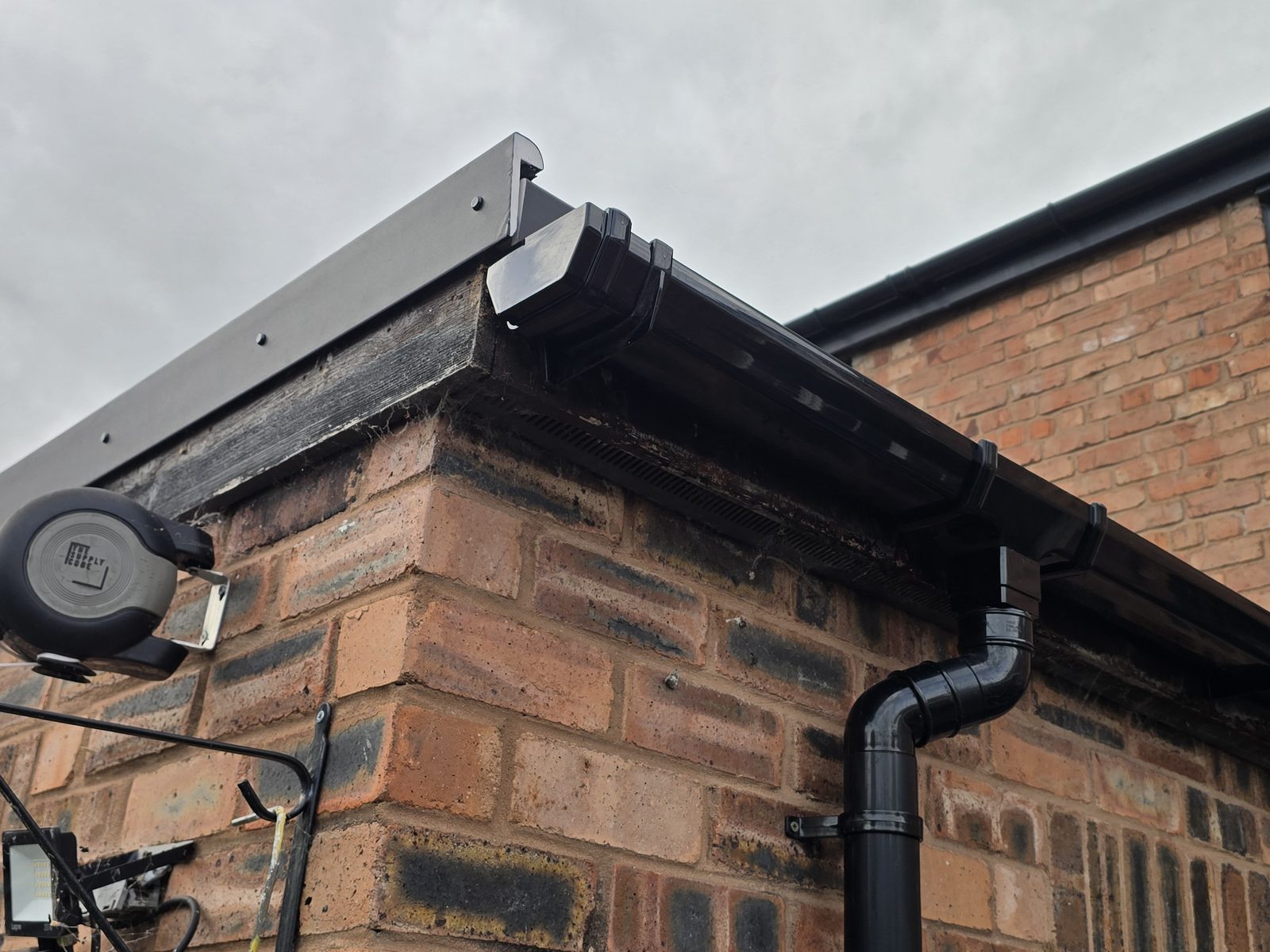
The felt had split and holed along the edges, and on one side the drip edge had come away from the roof completely, leaving the timber underneath open to the weather.
It had also been patched before. A grey coating had been painted over one of the leak points — but the split underneath had opened straight back up through it, which is exactly what surface coatings tend to do on a roof that’s moving.
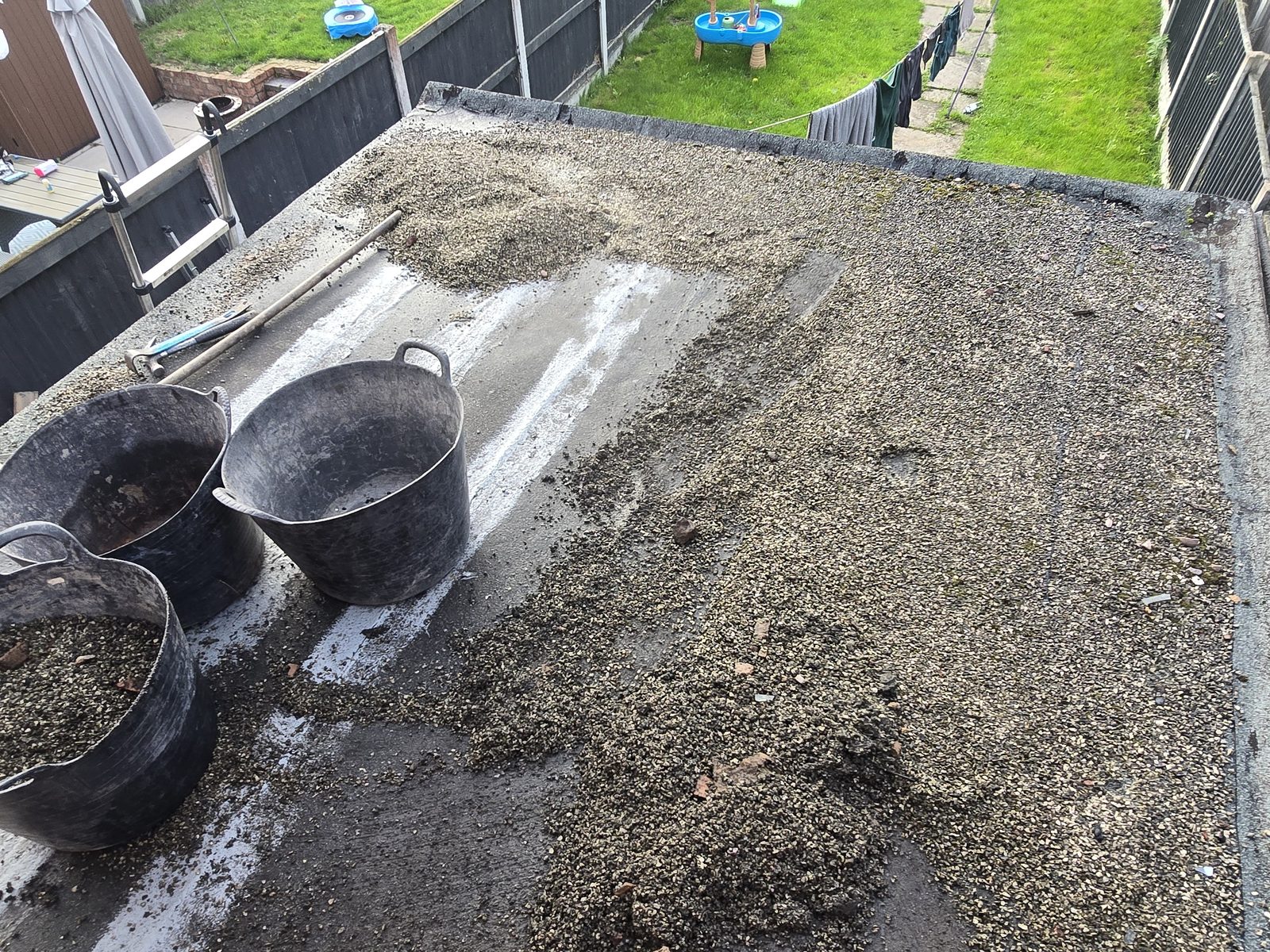 Before
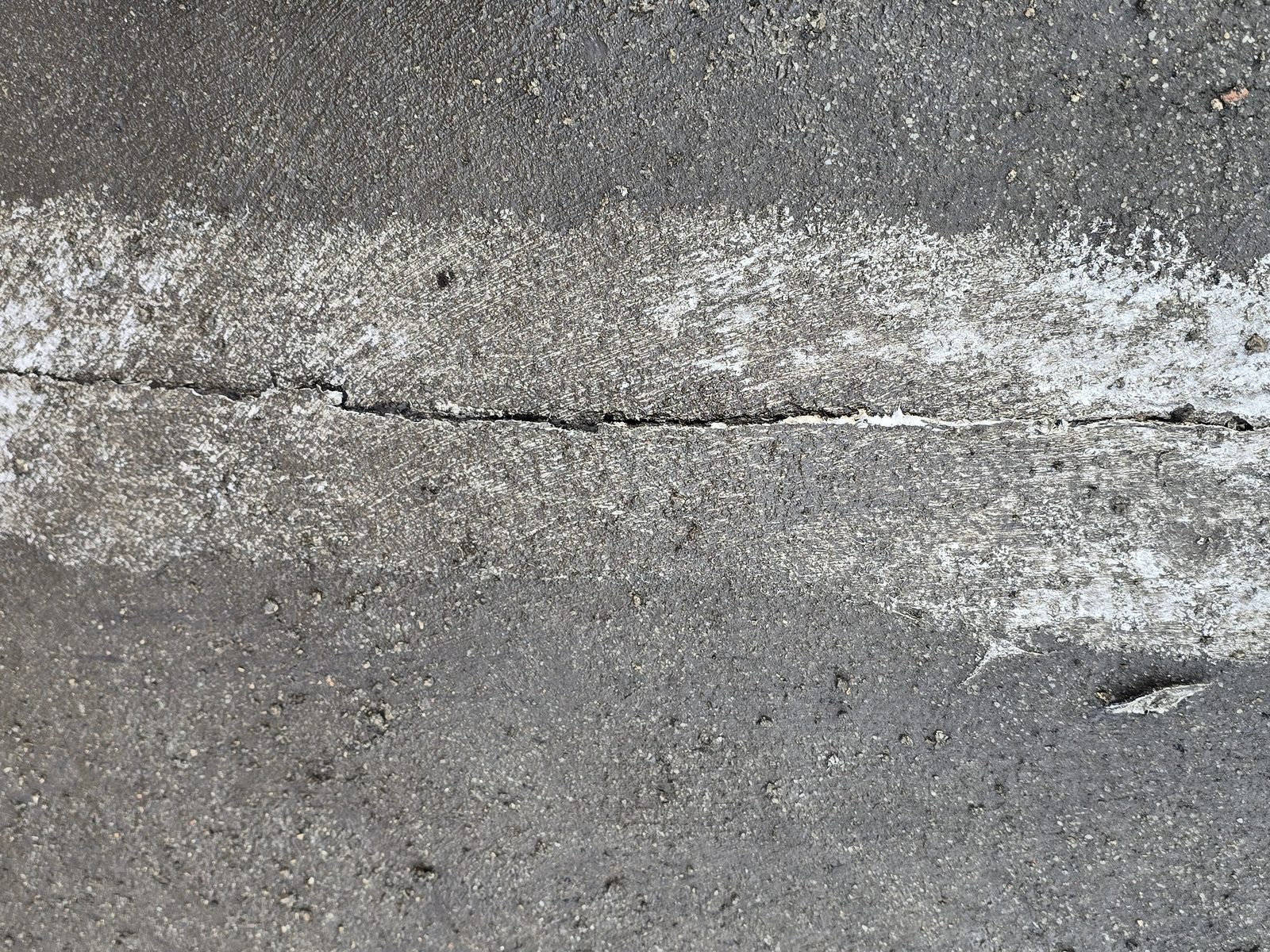 The old repair
Why we didn’t patch it again
When a flat roof is leaking in one spot, a repair is often the sensible answer, and we’ll say so. This one was different. The edges had gone, the felt had split, and the joint where the roof meets the house wall had been sealed with self-adhesive flashing tape rather than lead.
Tape can hold for a while, but it relies on adhesive stuck to the face of the brickwork. It isn’t a substitute for lead flashing set into a cut joint, and once it lifts, water runs down the wall and straight in behind the roof covering.
With three separate problems on one small roof, another patch would only have moved the leak somewhere else.
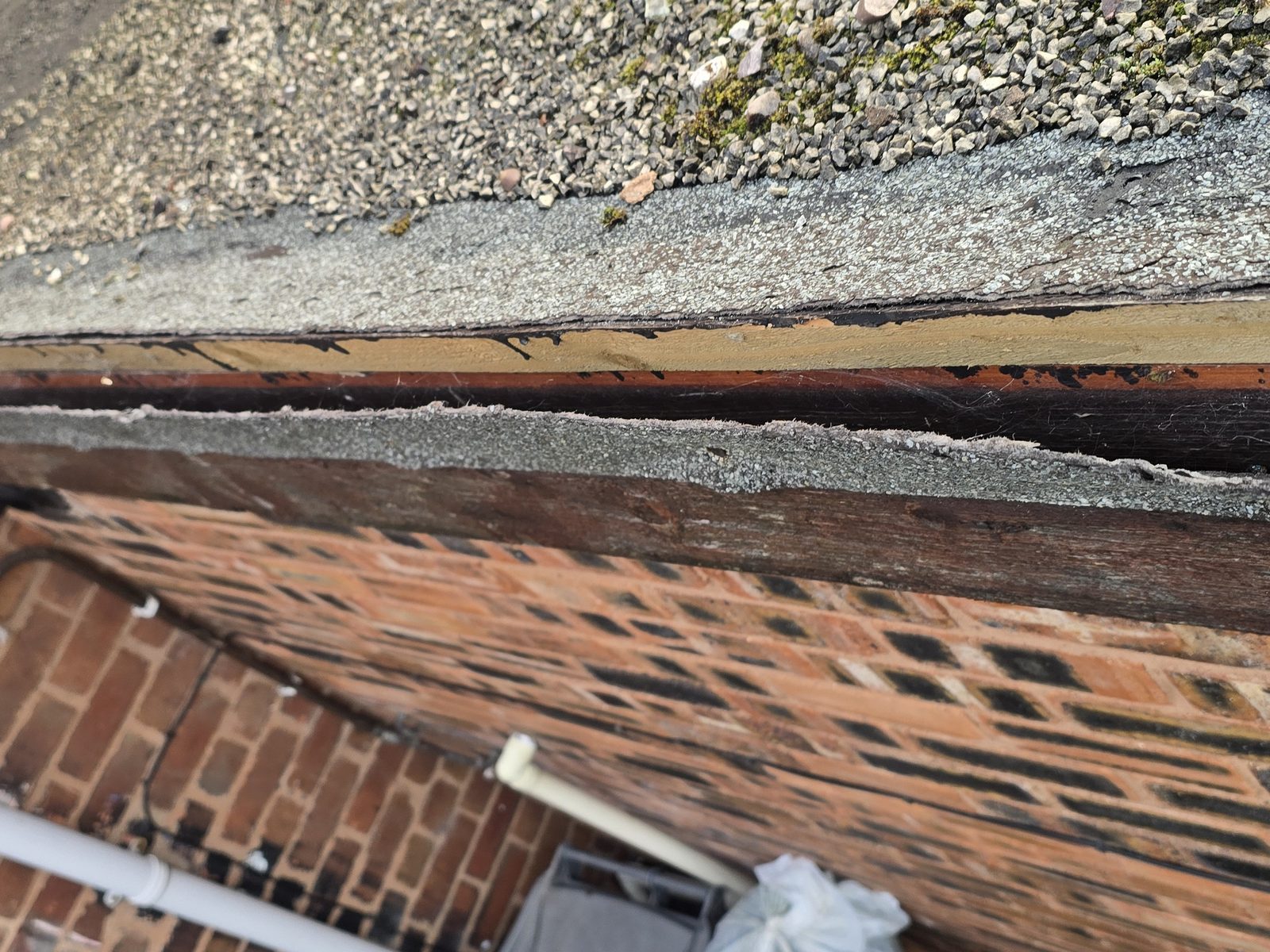
What was underneath
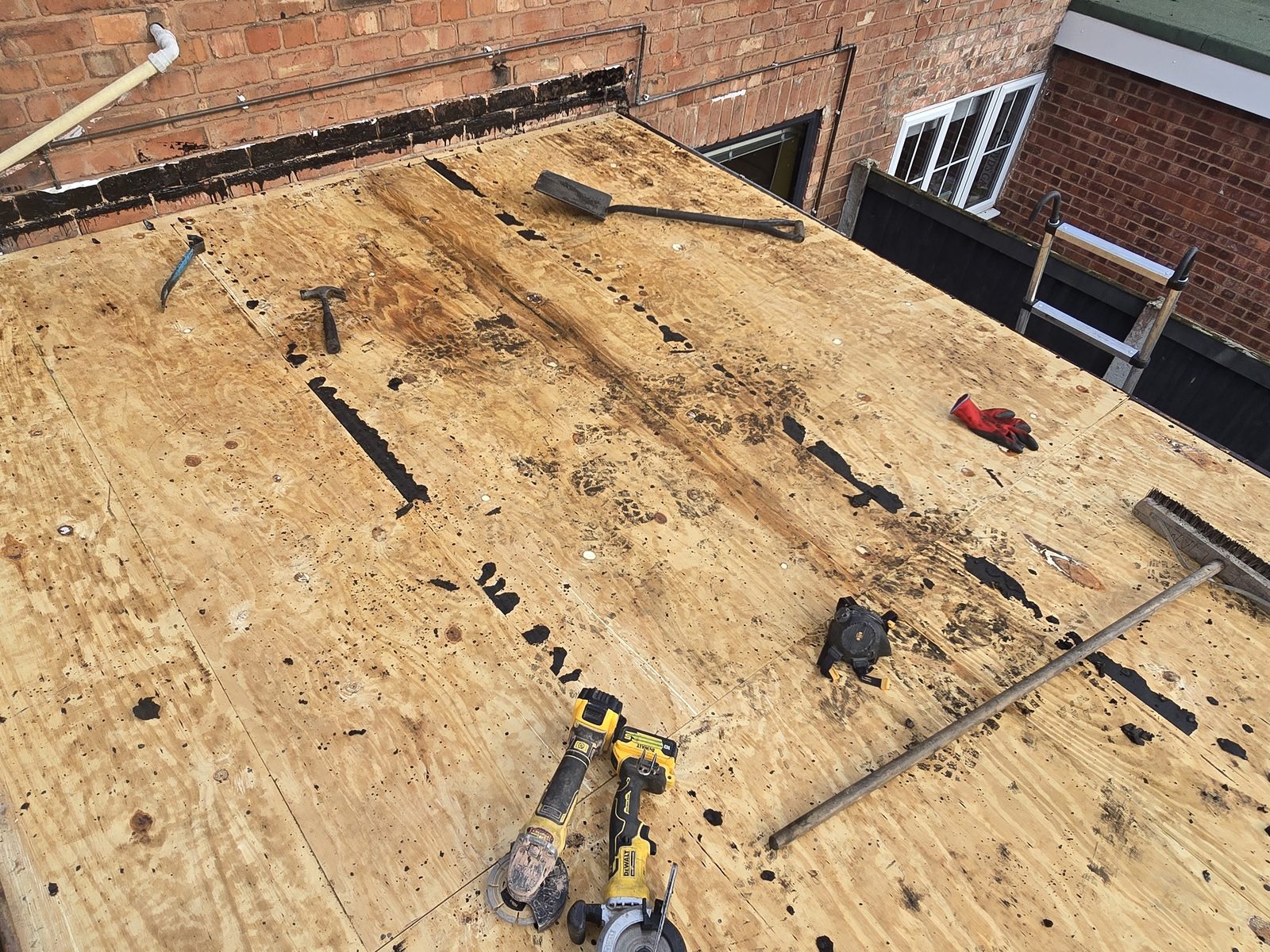
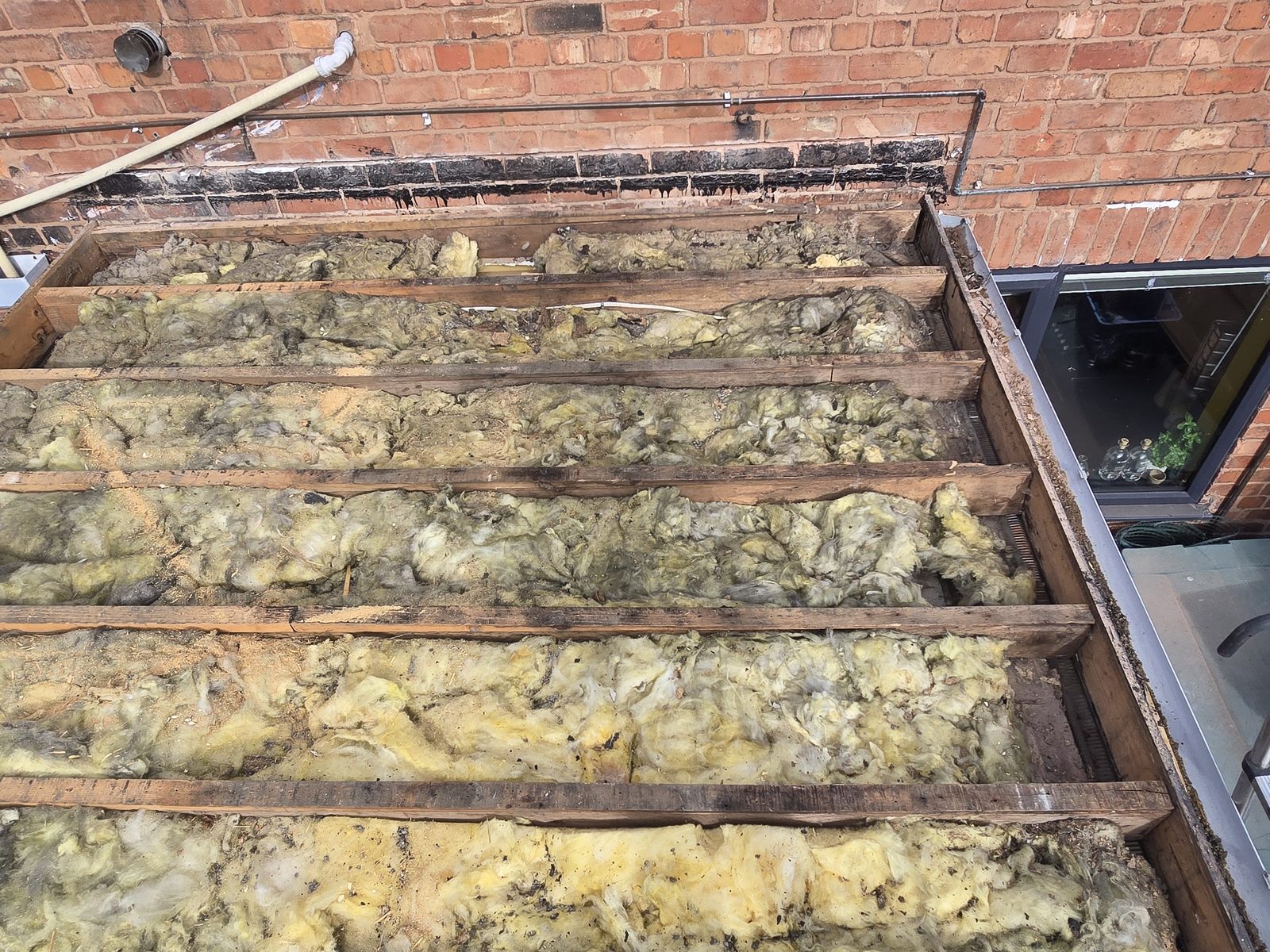
With the chippings and felt off, the old plywood deck showed a dark water track running down one of the board joints — the path the leak had been taking before it reached the ceiling.
We took the deck up to see what state the structure was in. The joists were sound and the insulation was dry, so the insulation stayed exactly where it was. There’s no sense charging a customer to replace something that’s still doing its job.
New deck and fully bonded EPDM
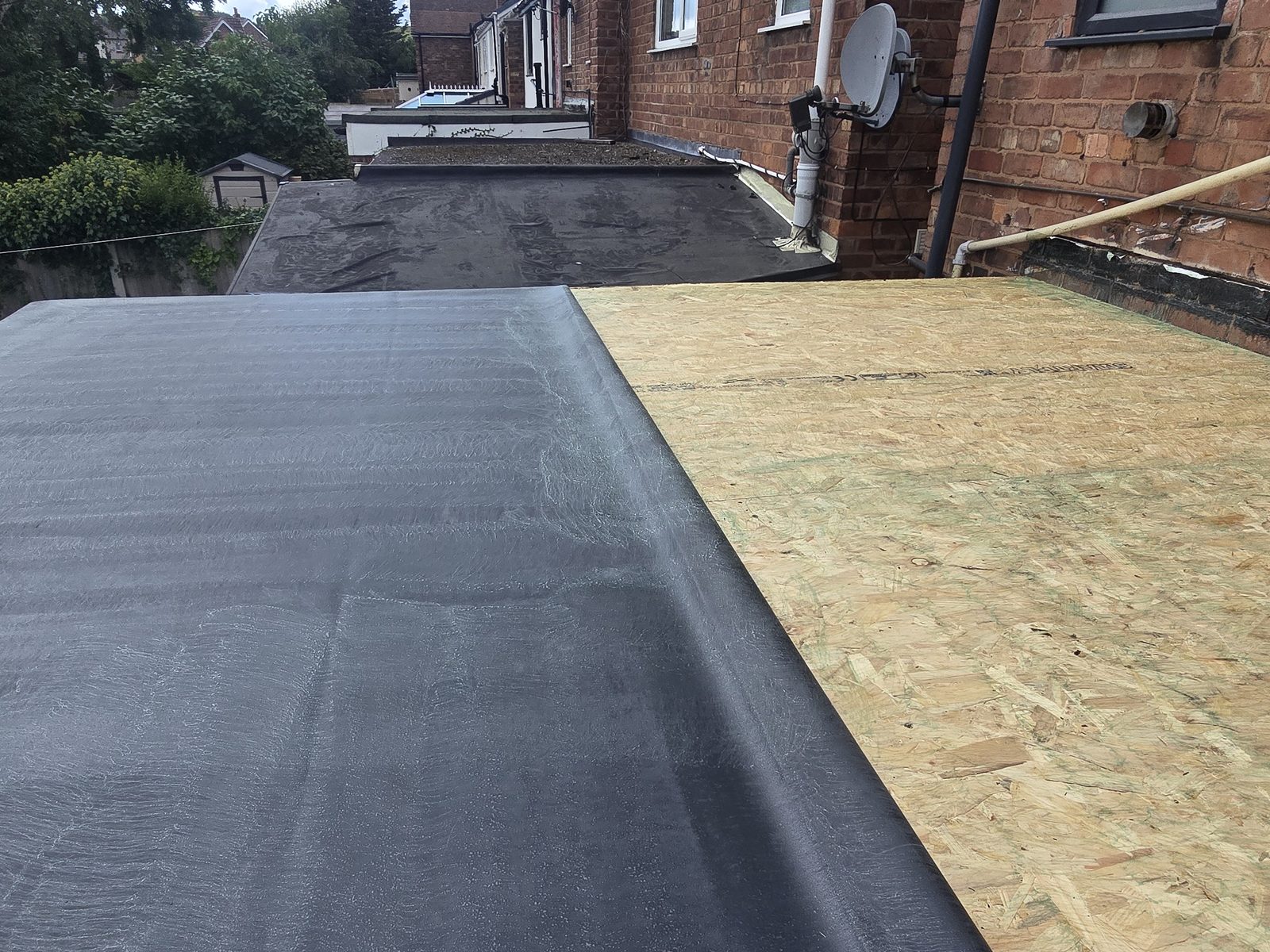
A new 18mm OSB deck went down across the whole roof, fixed to the existing joists.
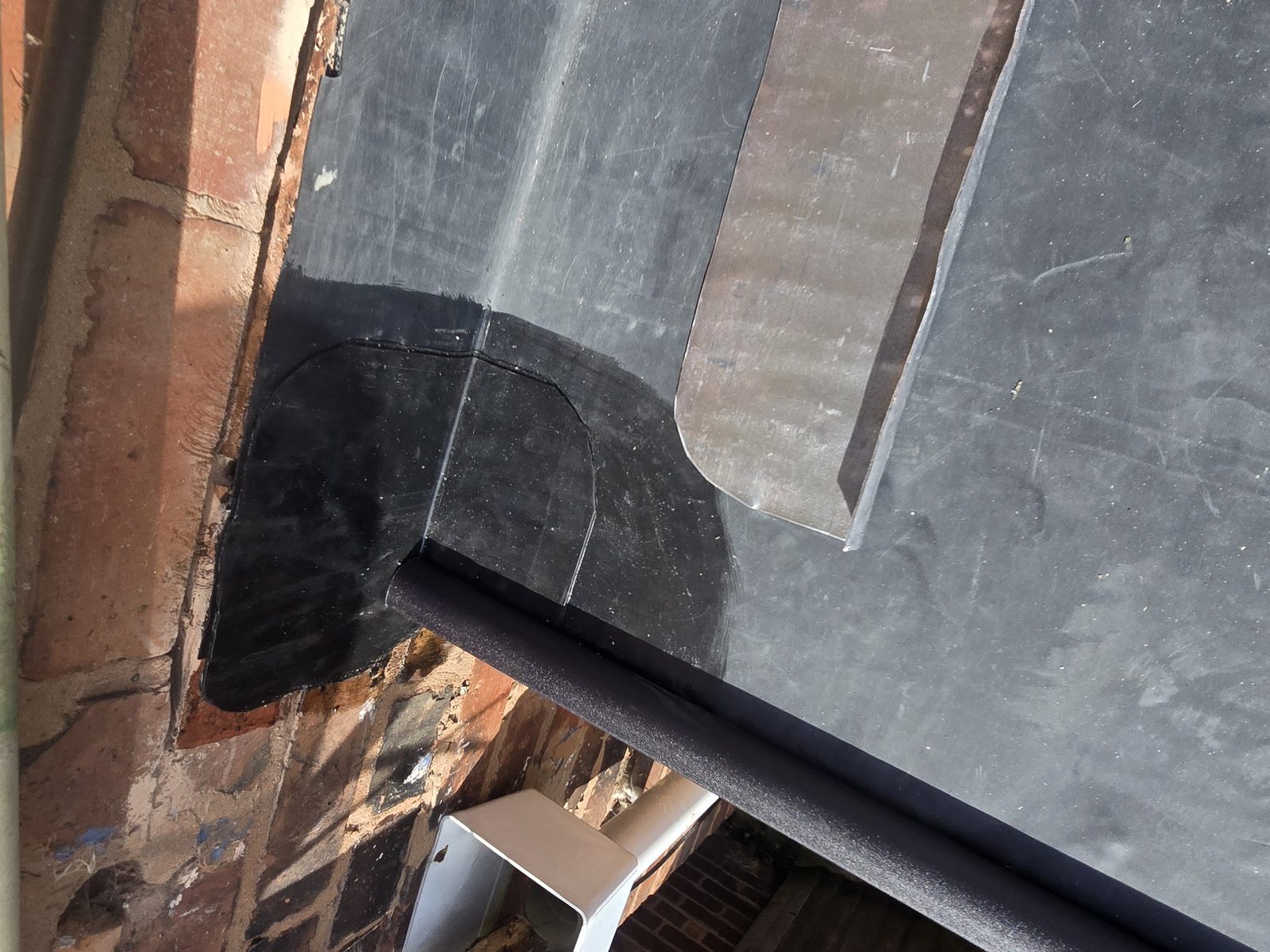
The EPDM rubber membrane was then fully bonded to it, with contact adhesive applied both to the deck and to the back of the sheet. Bonding it across the whole area means there’s no loose membrane for the wind to get under, and the corners and upstands were formed and sealed with FormFlash detailing.
The wall joint, done properly
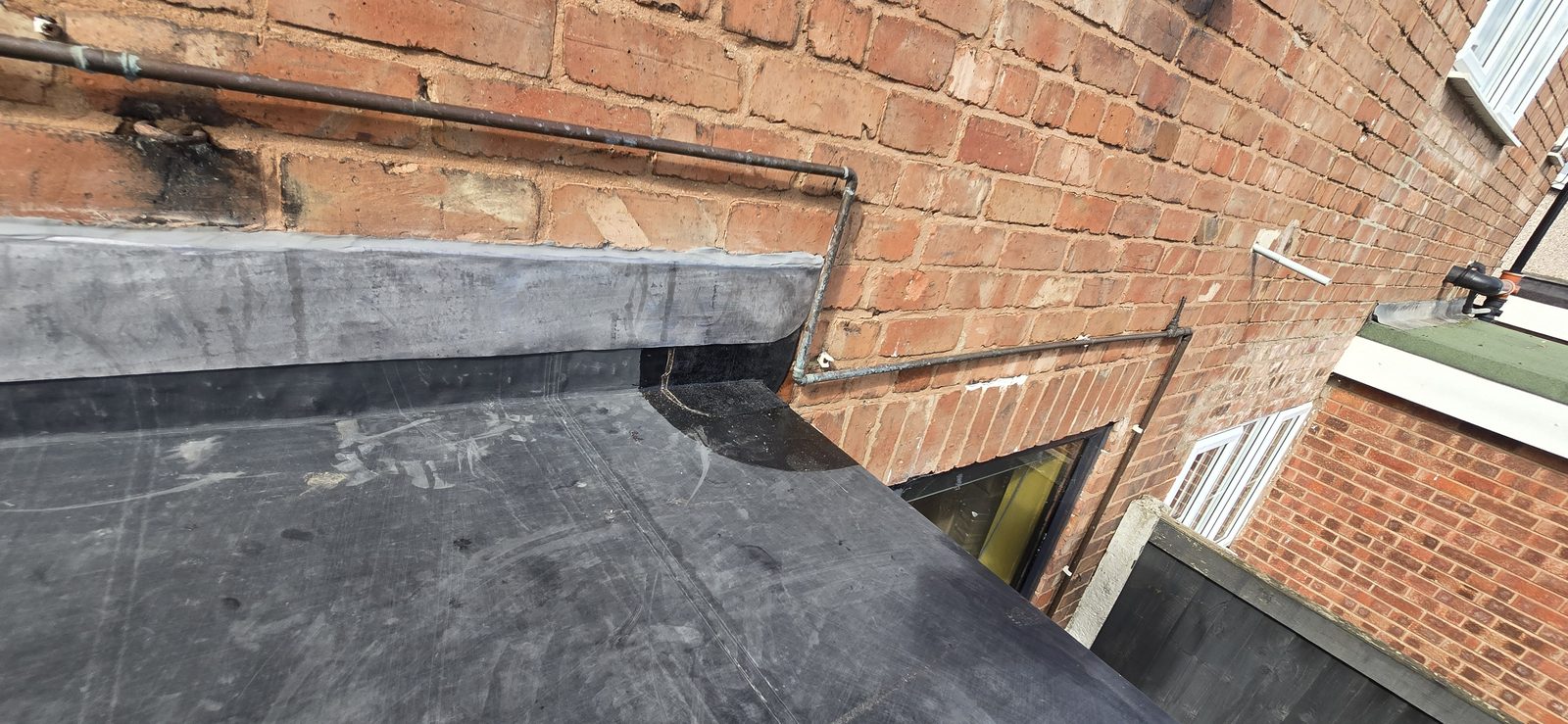
The flashing tape came off and a chase was cut into the brickwork above the roof. New Code 4 lead was dressed over the rubber upstand, tucked into the chase, wedged and pointed, and worked around the existing pipework running along the wall.
That joint is where most flat roof leaks start. Done in lead, it directs water running down the wall out onto the roof rather than behind it — and it will still be doing that long after any tape would have lifted.
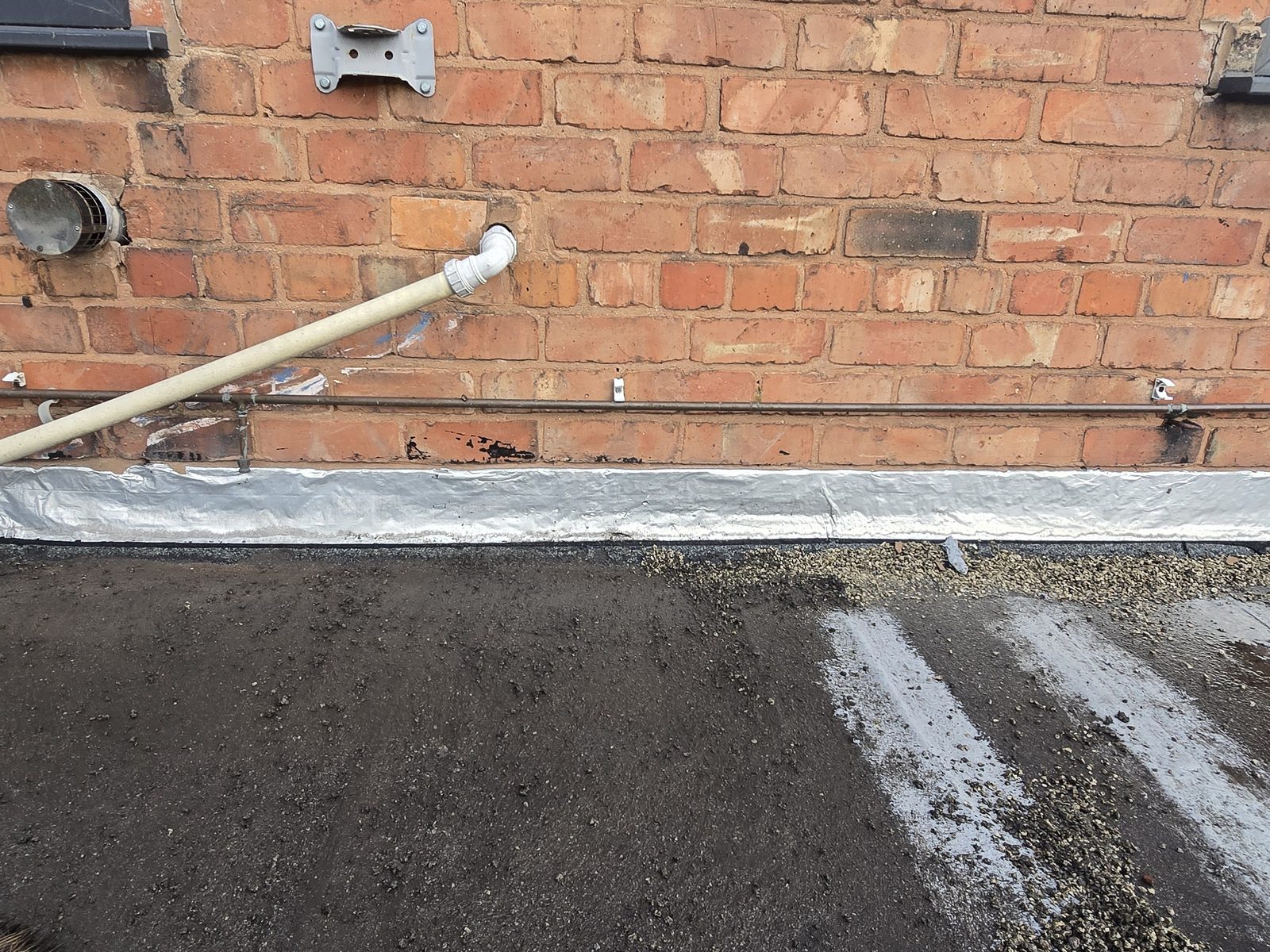 Before
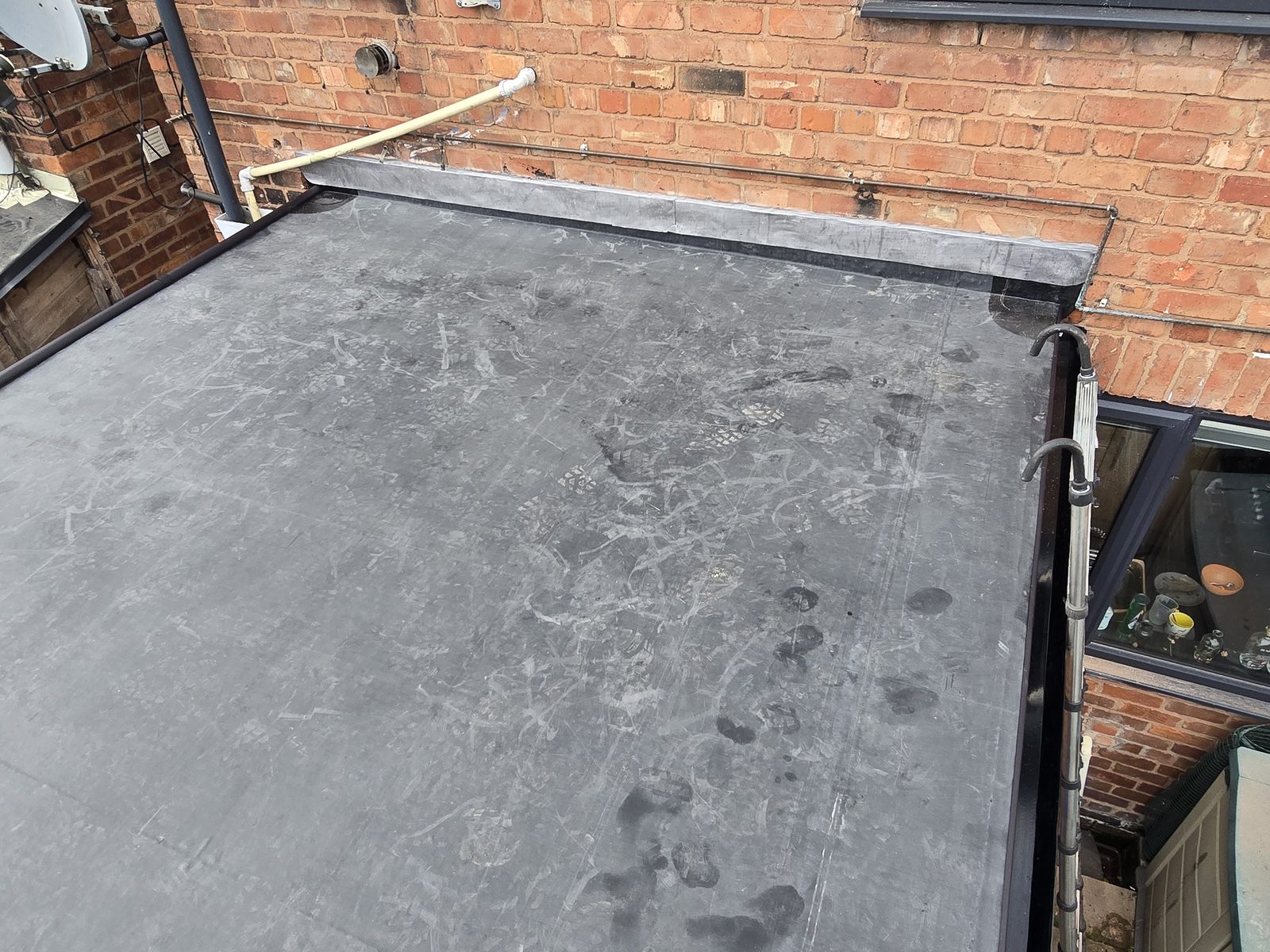 After
After
Finishing off
New black trims went on all round, and the old gutter and downpipe — both well past their best — were replaced with new black ones to match.
The result
Stripped and replaced in a single day, with the waste cleared off site the same afternoon.
The customer now has a roof with a new deck, a fully bonded rubber covering, a properly flashed wall joint and no loose chippings hiding what’s going on underneath. The work is covered by a 15-year LSE Roofing workmanship guarantee.
If your flat roof has been patched more than once, or it’s covered in chippings so you can’t see the state of the felt, it’s worth having it looked at before winter. Send us a few photographs and we’ll give you an honest opinion on whether it needs a repair or replacing — we won’t sell you a new roof you don’t need. More about flat roofing and EPDM or roof repairs.
Flat roof leaking in Connah’s Quay or Deeside?
Call to talk it through, or send a few photographs and we’ll tell you honestly whether it needs a repair or replacing.